The area of effect model keeps people in control of problem-solving while using large language models as selective assistants. Human judgment determines which outputs are valuable, which claims require skepticism, and which responses must be rejected or reevaluated. section 1.2.3
The model assigns distinct responsibilities:
- People lead the testing activity, assess value, and decide how to respond to unsatisfactory output. section 1.2.3
- LLMs support selected tasks rather than attempting to replicate the full testing lifecycle. section 3.3.4
- Risk analysis guides the interaction: the LLM expands identified risks and may suggest risks that were previously overlooked. section 5.1.1
- System modeling supplies the context needed for targeted prompts and more relevant risk suggestions. section 5.3.1
Applied to test planning, the model discourages generating test cases as the sole strategy. Teams first identify risks, then choose testing activities that address those risks, using LLMs to broaden coverage without surrendering direction. section 5.1.1
Targeted risk prompt
Model one part of the system, such as with a data flow diagram. Select a specific component from that model and use it to create a targeted prompt for suggested risks. Iterate across system parts to build a focused set of component-specific concerns. section 5.3.1
Figure 5.2 Area of the effect model demonstrating the core roles of the human and the LLM as an assistant
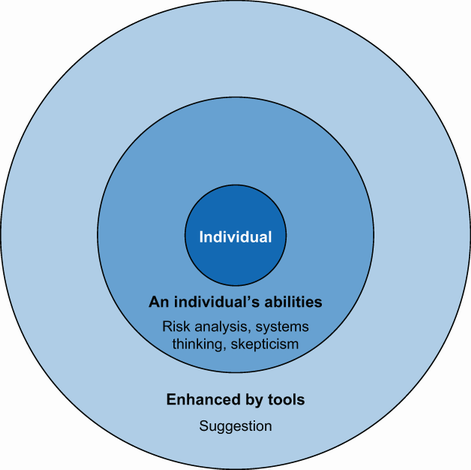
Use the visualization to distinguish human direction from the LLM’s assistant role during test planning. section 5.1.1
Figure 5.5 Area of effect model showing the skills required to get valuable outputs from an LLM
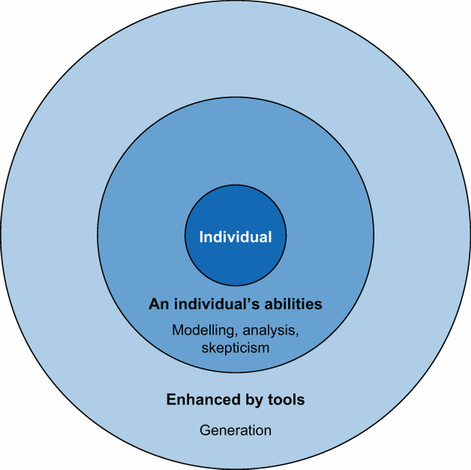
Use the figure to connect modeling and analysis skills with the quality of LLM outputs. section 5.3.1
