A within-subjects design, also called a repeated-measures design, exposes every participant to every independent-variable condition and repeatedly measures the dependent variable. Researchers commonly compare measurements before and after treatment or across multiple time points. section 3.2.4
Use the design to organize comparisons and interpret its role among related study designs:
- Compare a participant or group with itself across conditions, reducing the focus on differences between separate participant groups. section 3.2.4
- Choose statistical tests designed for repeated measures rather than tests for independent samples used in between-subjects designs. section 3.2.4
- Distinguish a simple within-subjects comparison from cohort and longitudinal designs, which track groups or participants over longer periods. section 3.2.4 section 3.4
Blood pressure before and after treatment
Measure one group’s blood pressure before treatment and again afterward, then evaluate the change within the same participants. section 3.2.4
Figure 3.11 Within-subjects comparisons evaluate differences before and after treatment.
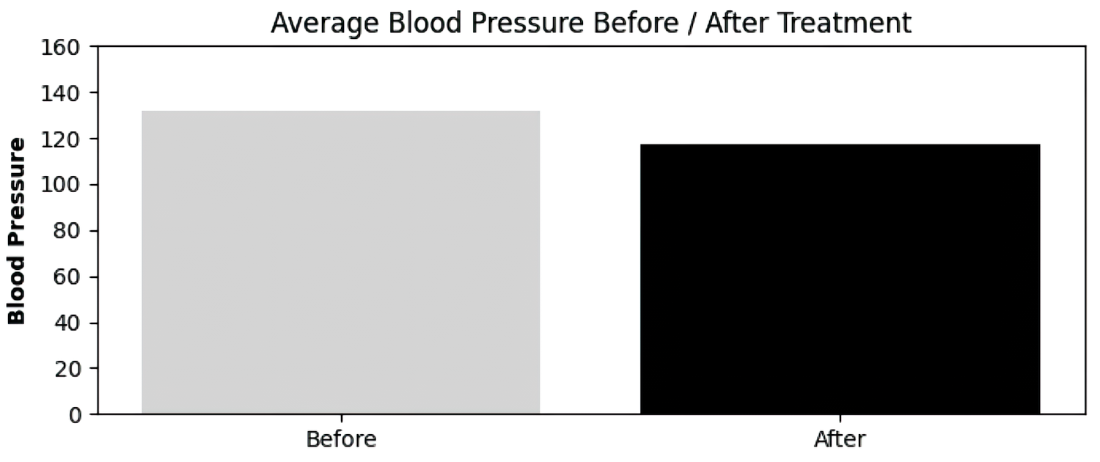
View a visual comparison of within-subjects measurements taken before and after treatment. section 3.2.4
