Workload separation isolates computational workloads so resource-intensive queries or failures in one workload do not degrade another. In a federation layer, dedicated engines or clusters can be tuned for different latency, throughput, concurrency, and reliability requirements. section 8.3.4 section 8.3.7
Apply separation through explicit capacity and routing controls:
- Assign interactive analysis, scheduled refreshes, and BI dashboards to engines with different executor counts, memory footprints, and concurrency limits. section 8.3.4
- Resize, horizontally scale, or pause engines as demand changes, balancing responsiveness and cloud compute cost. section 8.3.4
- Route queries by user group, data source, or query type; Trino Gateway can distribute them across dedicated clusters through one connection URL. section 8.3.4 section 8.3.7
Figure 8.10 Trino clusters are made up of a coordinator node that distributes work among worker nodes. The worker nodes can be horizontally scaled by adding more workers to handle more queries.
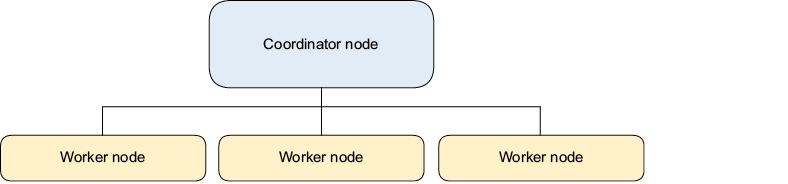
The coordinator–worker diagram clarifies how Trino clusters distribute work and scale workers to accommodate additional queries. section 8.3.7
