An Atlas Search Node is a specialized MongoDB Atlas node that runs the mongot search process separately from database-serving processes. This separation isolates search workloads from other database operations. section 11.3.2
Atlas automatically assigns a mongod to each mongot. The mongot process synchronizes search indexes with its mongod through initial synchronization and ongoing change-stream updates. section 11.3.2 section 11.8
Use dedicated search nodes when:
- You need search operations isolated from database-serving workloads. section 11.3.2
- You run a dedicated M10-or-higher sharded or unsharded Atlas cluster. section 11.3.2
- You need greater search performance for large vector-search datasets and can accept higher resource consumption. section 12.6
Sizing across shards
Deploying two Search Nodes for a three-shard cluster produces six Search Nodes: two dedicated to each shard. Reserve an additional 20% local SSD capacity for search-index operations. section 11.3.2
Figure 11.4 Within the Atlas Search Nodes architecture, multiple MongoDB (mongod) instances manage data storage and execute search queries, forwarding them to mongot processes. These processes handle initial synchronization and continuous updates via change streams, ensuring that search indexes are consistently updated with the latest data changes across all nodes. (Image © MongoDB 2024 CC BY-NC-SA 3.0)
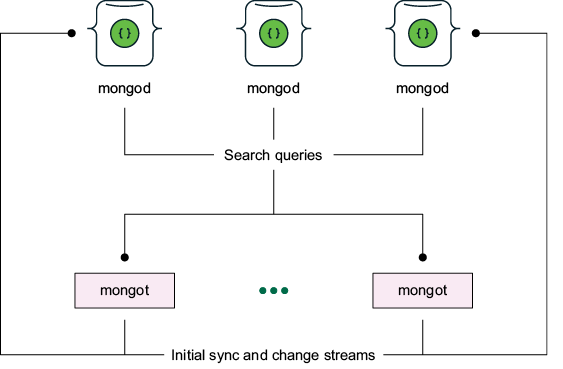
The architecture diagram traces data-serving mongod instances, search-serving mongot processes, initial synchronization, and continuous index updates. section 11.3.2
