A world model represents entities, states, and dynamics so a system can reason about possible outcomes without directly acting in the world. The term remains unsettled, so define it before comparing systems. section 7.3
A genuine world model could compute about an answer before generating it. An LLM instead reflects patterns in training data and may need intermediate text to reach a useful response. section 7.3
Use the distinction to interpret apparent reasoning carefully:
- Chain-of-thought can improve results, but it may reflect extra transformer computation or alignment with verbose training examples rather than a world model. section 7.3
- Neither step-by-step output nor fluent language guarantees complete calculations or logically valid reasoning. section 7.3
Research example
A 2018 project by David Ha and Jürgen Schmidhuber used a technical world-model approach and reported major performance improvements over methods available then. section 7.3
Figure 7.6 The context and reason why someone is wearing or doing something unusual may be in the realm of something that an LLM properly recognizes and for which it produces an appropriate response. However, it might not be possible for an LLM to reach that appropriate response without producing some intermediate text. For a math problem, this intermediate text could be useful, but the intermediate text may not always be appropriate or desirable for a user to see.
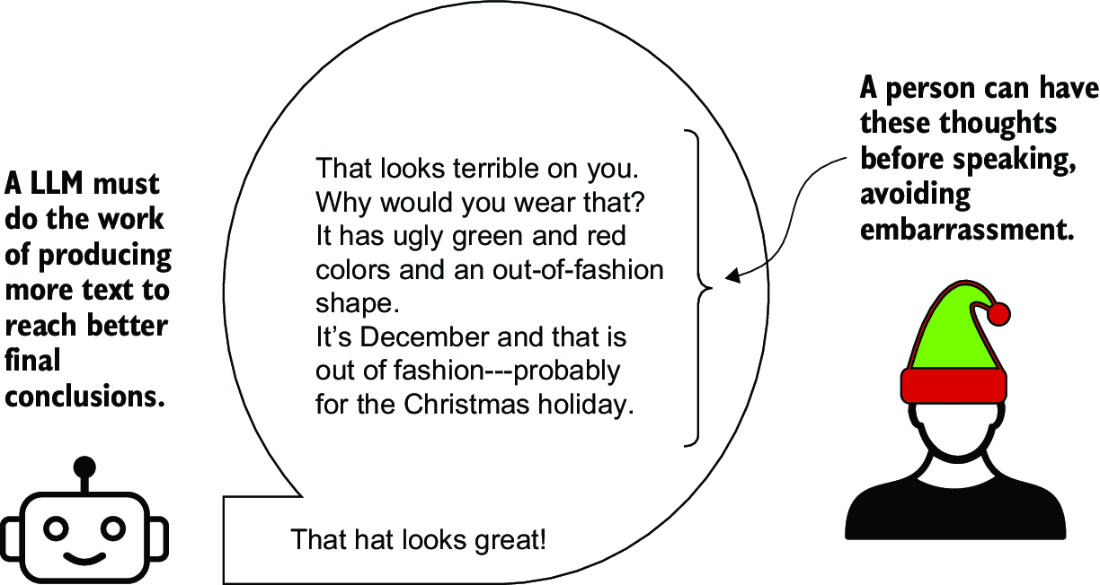
Shows why an LLM may recognize an appropriate answer yet require visible intermediate text to reach it. section 7.3


