liveBook · Manning

A Pattern Language

As explained in Effective Behavior-Driven Development

A structured collection of interrelated patterns that helps identify an appropriate pattern for a specific context.

A pattern language groups related patterns so teams can find one suited to a particular context. The patterns are interrelated, and common flows between them can be mapped. section 12.2

A useful pattern has a descriptive name and makes clear the challenge it addresses, where it applies, and enough of its solution to use. Grouping patterns around related concerns helps people navigate among them. section 12.2

Prop Cupboard

For managing scenario input data, the Prop Cupboard language groups patterns such as Domain Default, Object Mother, and Data Table Assertion. Each addresses a different concern, from defining default test values to comparing tables with diagnostic detail. section 14.0

Figure 12.1 Map of idiomatic scenario pattern languages
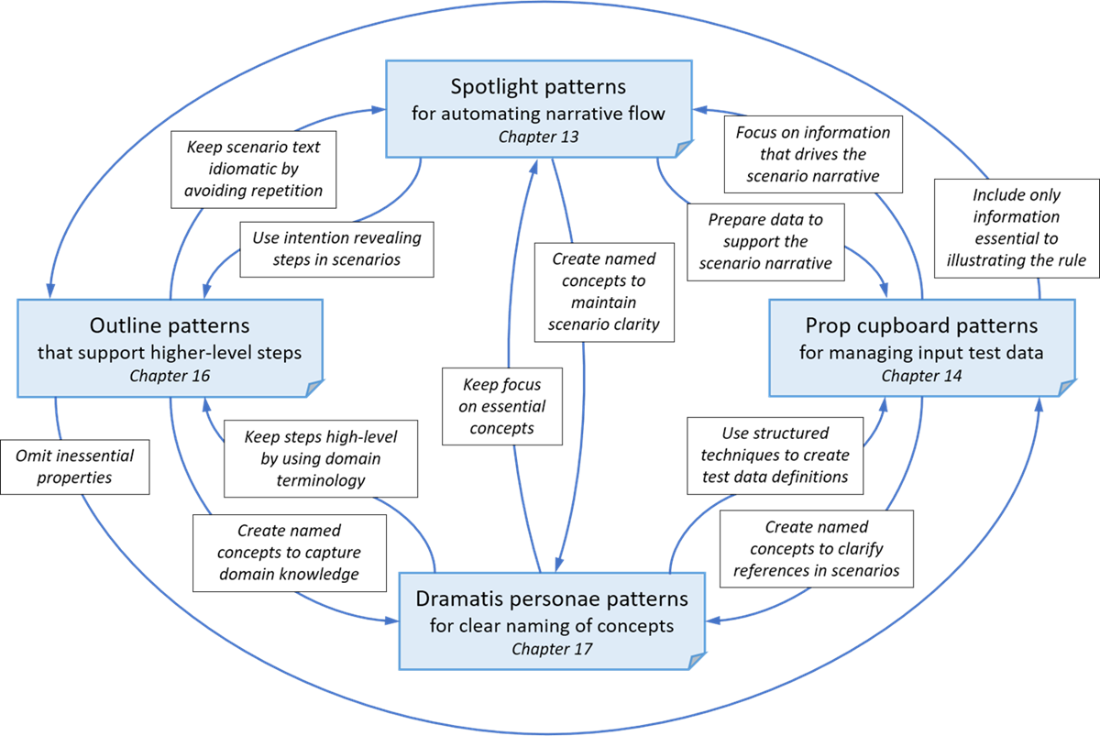
A map of idiomatic scenario pattern languages provides a visual view of related pattern-language groupings. section 12.2


How Effective Behavior-Driven Development covers it

How deep it goes
Defines pattern-language relationships and illustrates them with a domain-specific collection of input-data patterns.
Examples
Uses the Prop Cupboard collection, including Domain Default, Object Mother, and Data Table Assertion.
What you can do after
Evaluate related patterns to identify one suited to a specific context.
How it connects
Connects design patterns with scenario automation and maps common flows among related patterns.

Also explained in

Compare how 2 books explain A Pattern Language →

Related concepts

This explainer was generated by Manning's knowledge graph from the text of Effective Behavior-Driven Development. The section links point to the parts of the book it draws on.