liveBook · Manning

Acceptance testing

As explained in Django in Action

An acceptance test verifies that software satisfies requirements from the perspective of an expected feature or user outcome.

Acceptance testing verifies that a feature performs the action required by its requirements. It is also called behavioral testing because it maps tests to user-facing behavior and acceptance criteria in a user story. section 8.1.1 section 8.10

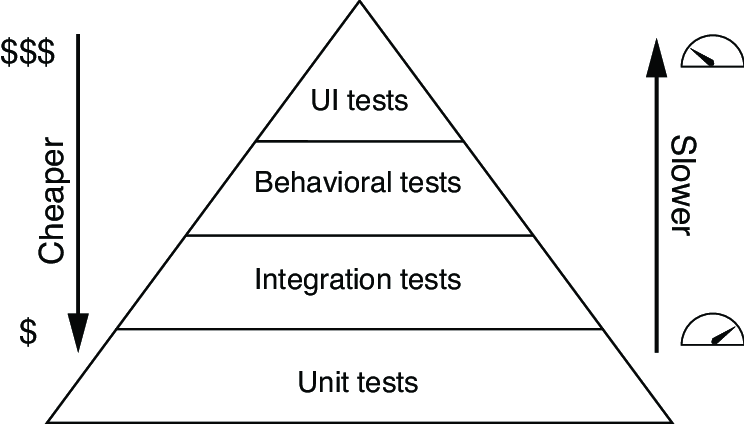
Place acceptance testing in the testing hierarchy:

  • Unit tests check a single component; integration tests check several components working together. section 8.1.1
  • Acceptance tests check whether a defined feature works as designed, often through a user-facing process. section 8.10
  • UI tests interact with the interface like a user; their boundary with acceptance tests can be blurry. section 8.1.1
  • Cucumber is a popular framework specifically associated with this level of testing. section 8.1.1
Figure 8.1 Hierarchy of testing categories
figure

Use the testing-category hierarchy to compare acceptance testing with unit, integration, and UI testing. section 8.1.1


How Django in Action covers it

How deep it goes
Defines feature-level behavior and its place in the testing pyramid, but does not detail implementation procedures.
Examples
Uses a shipping-cost page with varied addresses and shipping zones to illustrate the cost of higher-level testing.
What it assumes
Assumes a defined feature and acceptance criteria, while distinguishing them from lower-level component and integration checks.
What you can do after
Evaluate whether a defined feature works as designed from a requirements-oriented, often user-facing perspective.
How it connects
Connects acceptance criteria, user stories, behavioral testing, integration testing, unit testing, UI testing, and Cucumber.

Also explained in

Compare how 3 books explain acceptance testing →

Related concepts

This explainer was generated by Manning's knowledge graph from the text of Django in Action. The section links point to the parts of the book it draws on.
