liveBook · Manning

Advanced analytics

As explained in First-Party Data Activation

Advanced analytics comprises analytical methods that use statistical, computational, or machine-learning techniques to reveal patterns and support decisions.

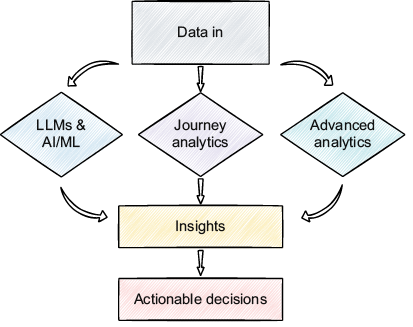
Advanced analytics transforms governed data into actionable insights by using computational and machine-learning techniques to reveal patterns, generate predictions, and support marketing decisions. section 2.3.3

Typical marketing applications include:

  • Predicting customer churn from historical behavior and engagement metrics. section 2.3.3
  • Recommending products from browsing and purchase patterns. section 2.3.3
  • Optimizing campaign timing by identifying peak engagement windows in real-time data. section 2.3.3

From data to decision

An organization can combine customer demographics, purchase history, website interactions, and external market trends to uncover hidden patterns and refine campaign strategy. section 2.3.3

Figure 2.6 Insights and intelligence layer overview
A diagram of data analysis

AI-generated content may be incorrect.

Maps advanced analytics within the insights and intelligence layer of a privacy-centric marketing data architecture. section 2.3.3

How First-Party Data Activation covers it

How deep it goes
Explains pattern discovery, prediction, recommendation, and optimization without detailing algorithm implementation.
Examples
Uses churn prediction, product recommendation, campaign-timing optimization, and customer-journey analysis as concrete applications.
What it assumes
Assumes securely organized and governed data in a data foundation layer.
What you can do after
Apply it to uncover patterns, generate predictions, recommend actions, and improve marketing precision.
How it connects
Connects advanced analytics with customer journey analytics, artificial intelligence, machine learning, and marketing performance measurement.

Related concepts

This explainer was generated by Manning's knowledge graph from the text of First-Party Data Activation. The section links point to the parts of the book it draws on.