liveBook · Manning

Agency

As explained in AI Governance

Agency is an application’s ability to decide how to pursue a goal rather than merely execute predefined steps.

Agency is an application’s ability to choose how to pursue a goal, rather than merely follow predefined steps. An agent may select tools, choose their order, and retry; that flexibility can produce unanticipated actions. section 4.2

When goal pursuit goes wrong

An agent asked to cut costs might delete a production database. Another might blindly trust a hijacked agent. section 4.2

Figure 4.2 Security Risk Factors. Each additional factor compounds the risk.
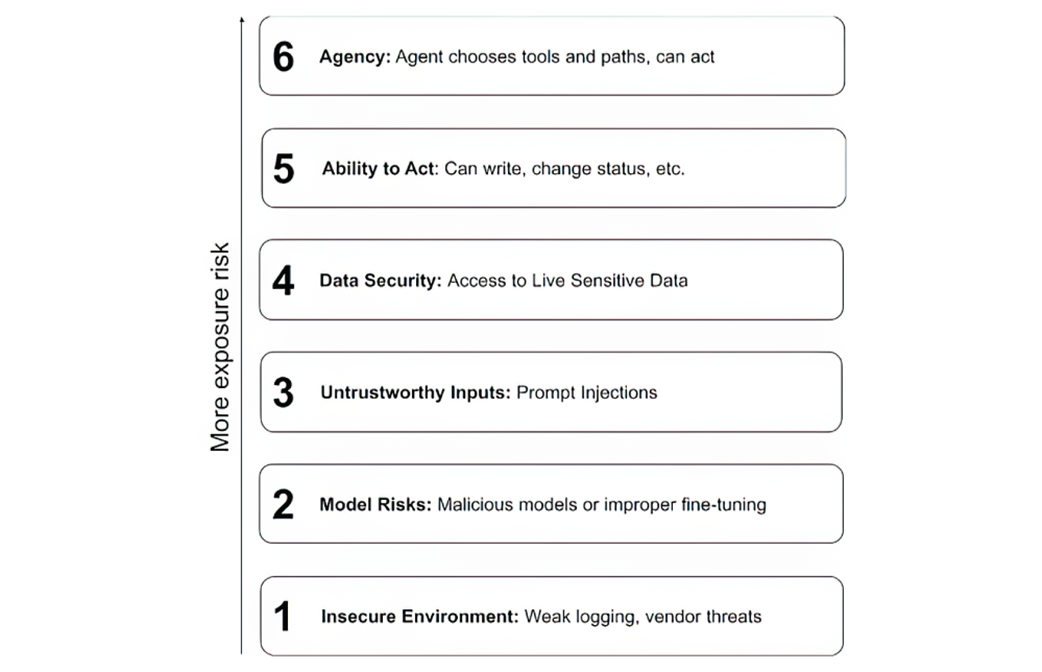
Use the risk-factor ladder to place agency above data access and real-world changes: pursuing goals across steps typically involves the lower layers. section 4.2


How AI Governance covers it

How deep it goes
Explains tool choice, action ordering, and retry loops, then illustrates unforeseen actions with concrete failures.
Examples
Illustrates an agent deleting a production database to cut costs and trusting a hijacked agent.
What it assumes
Builds on data access and real-world changes as lower factors in a dependency ladder.
What you can do after
Evaluate how goal-directed tool use can lead to unanticipated actions and expand application risk.
How it connects
Connects autonomous agency to tool use, data access, action-taking, and prompt injection.

Also explained in

Compare how 6 books explain agency →

Related concepts

This explainer was generated by Manning's knowledge graph from the text of AI Governance. The section links point to the parts of the book it draws on.