Relevance means that a result or design element clearly matches the meaning, subject, and purpose of what someone is looking for. In search, relevant content answers the user’s query with precise, in-depth information. In website design, relevant images and visual details support the page’s main message instead of distracting from it. section 11.2.4 section 6.9.3
Search systems and design reviews use relevance in related but distinct ways:
- Search engines interpret the meaning behind a query rather than relying only on exact keyword matches. section 11.2.4
- Latent semantic indexing identifies words, phrases, and concepts that commonly appear together, helping distinguish meanings such as “right” as direction or correctness. section 11.2.4
- Content gains relevance by answering the actual subject thoroughly and using synonyms and semantically related terms that deepen its topical coverage. section 11.2.4
- A visual element is relevant when its subject, placement, size, caption, and style make its purpose clear within the surrounding page. section 6.9.3
A relevant image on a cooking homepage
A raw-potato photograph may be high quality but still feel irrelevant when “INSTANT POT” is the page’s focus. An image of the finished dish, a kitchen scene, or the appliance in use would connect more clearly to the message. Captions, better placement, suitable proportions, and a consistent visual style would make the image’s role easier to understand. section 6.9.3
Figure 6.21 Somebody thought it was a great idea to stick random potatoes into the image in an arbitrary location and with a different background color. The kindest word to describe this suggestion is oblivious.
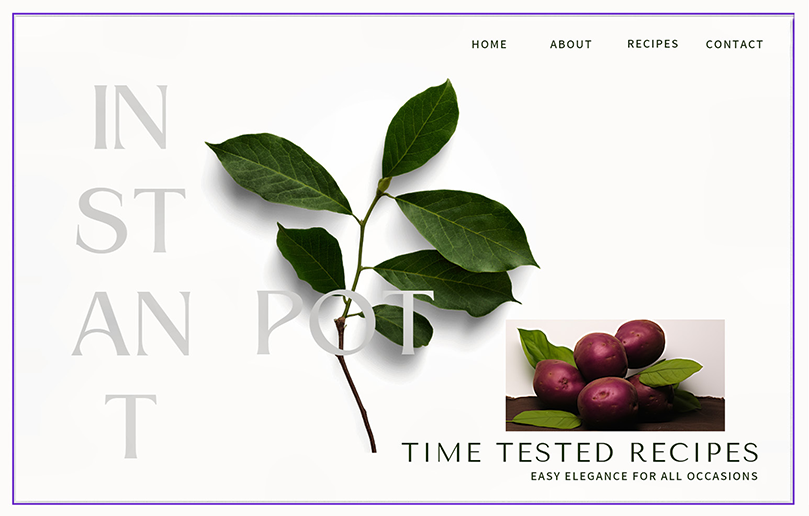
Use the figure to inspect how an arbitrary potato image becomes visually irrelevant through its subject, background, placement, size, missing context, and mismatched style. section 6.9.3










