An architectural decision is a choice that makes building, shipping, or changing a system significantly easier or harder. It might shape the system’s structure, behavior under stress, or ability to evolve. Choosing a database counts; not every line of code needs a formal review. section 1.3
Figure 1.2 A software system, like a food truck, has a distinct structure. The API is the service window, the business logic is the cook, and dependencies like the database and cache are the grill and fridge.
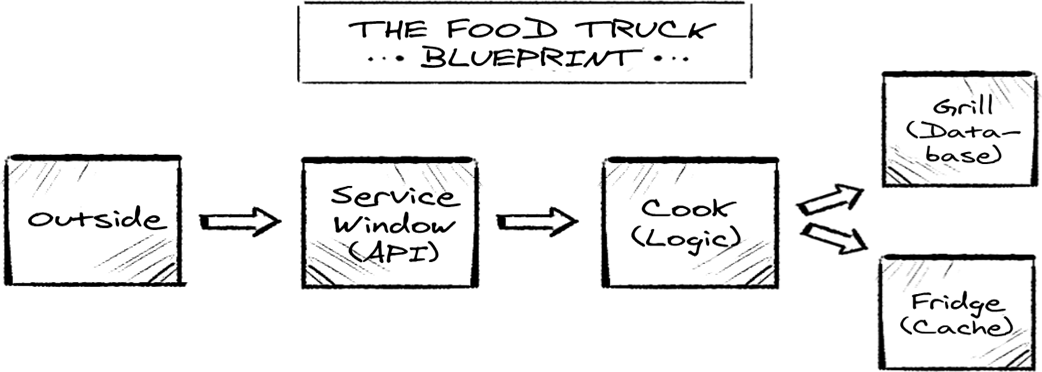
A food truck makes system structure tangible: the API is the service window, business logic is the cook, and the database and cache are the grill and fridge. Choices also affect what happens during a rush, when a dependency fails, or when the menu changes. section 1.3
There is no universally perfect architecture. A decision involves tradeoffs, such as shipping sooner versus making future changes easier. A useful decision records not just what was chosen, but why and what consequences follow. section 1.10
Make a small decision defensible:
- Name the technical choice and two realistic options. section 1.8.1
- For each option, state one benefit and one cost or risk. section 1.8.1
- Choose an option and give a one-sentence rationale; for larger decisions, use Spark → Inquiry → Sketch → Options → Decision. section 1.8.1 section 1.10





