Argo CD implements GitOps for Kubernetes environment pipelines. It watches Git configuration and applies it to live clusters, making Git the source of truth instead of relying on manual changes to a cluster. It can report when an application is unhealthy or a cluster is out of sync. section 4.2
A service pipeline builds and publishes an artifact; Argo CD handles the separate job of deploying released artifacts into an environment. Environment configuration can live in its own repository, branch or directory. One Argo CD installation can manage environments across multiple clusters. section 4.2 section 4.2.2
To create a staging application in the Argo CD user interface:
- Select New App, name the application, choose a project and decide whether Argo CD should create its namespace. section 4.2.1
- Set the configuration repository, revision and path. For a staging example, use a fork of https://github.com/salaboy/platforms-on-k8s/ and its chapter-4/argo-cd/staging/ directory. section 4.2.1
- Choose the destination cluster and namespace, then supply any installation-specific Helm parameters. The staging example targets the cluster running Argo CD and uses the staging namespace. section 4.2.1
Promote or undo a service release
After a service pipeline publishes a tagged release, submit a pull request changing its version in the environment configuration. Review and merge the change for Argo CD to sync it to staging. If the release causes problems, revert the configuration commit; a simple version downgrade might omit configuration changes needed by the older service. section 4.2.2 section 4.5
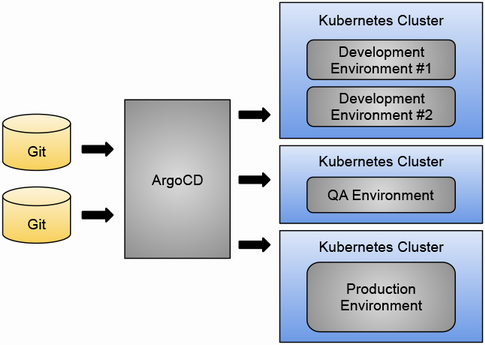
The diagram shows Git repositories supplying configuration to environments on live clusters, including environments managed across different clusters. section 4.2
Keep access to live namespaces restricted with Kubernetes RBAC so developers do not accidentally bypass the Git workflow. Check application health and sync status after configuration changes; these signals help reveal failed deployments and configuration drift. section 4.2.1 section 4.2 section 4.5



