Agent orchestration
Agent orchestration is the coordination of agents, their tasks, tools, and interactions to accomplish a larger objective or workflow.

Generative AI in Action
Container orchestration is the automated deployment, scheduling, scaling, networking, and management of containers.
- How it is used
- Coordinates models, data stores, and services in enterprise generative AI workflows.
- How deep it goes
- Explains orchestration responsibilities and illustrates framework use, without detailing container orchestration internals.
- Examples
- Illustrates PDF question answering and an enterprise bot that routes sales and support questions.
- What you can do after
- Evaluate orchestration responsibilities and framework choices for an enterprise generative AI application.
Read how Generative AI in Action explains agent orchestration →
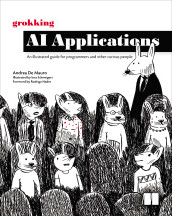
Grokking AI Applications
A supervisor agent is an agent that coordinates specialized agents, passes information between them, and decides which agents to activate for a request.
- How it is used
- Coordinates specialized agents to divide complex tasks into collaborative workflows.
- How deep it goes
- Defines delegation and demonstrates a workflow and Python implementation, while noting that hierarchical work is not parallelized.
- Examples
- Uses a winery copywriting team and a planner–copywriter–delivery workflow as concrete examples.
- What you can do after
- Build a hierarchical workflow by assigning specialist roles and letting a supervisor delegate tasks conditionally.
Read how Grokking AI Applications explains agent orchestration →
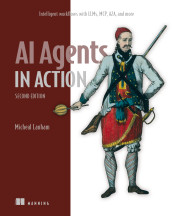
AI Agents in Action, Second Edition
An orchestrator is an agent that maintains a plan, delegates subtasks to worker agents, evaluates their results, and decides how execution continues.
- How it is used
- Coordinates specialized workers through a central agent for complex or multiple goals.
- How deep it goes
- Develops the pattern from architecture comparisons to typed plan and decision models and an orchestration loop.
- Examples
- Uses research and analysis workers to investigate multifaceted goals, including a residential solar-versus-wind comparison exercise.
- What you can do after
- Build an orchestrator loop with research and analysis workers, and inspect its decisions and aggregated findings.
Read how AI Agents in Action, Second Edition explains agent orchestration →

Vibe Engineering
The coordination of models, tools, data flows, and execution steps into a larger workflow.
- How it is used
- Coordinates specialized agents on decomposable software-development work while shifting the developer’s attention from individual execution to system supervision.
- How deep it goes
- Explains coordination alternatives, failure modes, and operational guardrails without specifying an orchestration implementation.
- Examples
- Illustrates conflicting authentication and API assumptions, a test agent using stale artifacts, and agent-management platforms.
- What you can do after
- Evaluate when to use an agent fleet and what operational controls its failures require.
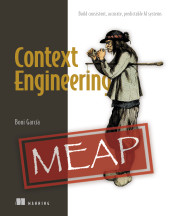
Context Engineering
Agentic orchestration coordinates an agent's actions, tools, and execution steps toward a task.
- How it is used
- Routes context and controls execution across agent steps, tools, subagents, and user interfaces.
- How deep it goes
- Explains runtime state, four control models, coordination patterns, interoperability, and operational safeguards.
- Examples
- Illustrates support-ticket routing and coding workflows divided among product, architecture, development, and review roles.
- What you can do after
- Evaluate orchestration models and coordination overhead, and identify external controls for agent-driven workflows.
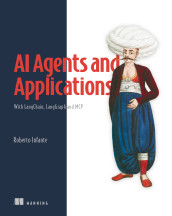
AI Agents and Applications
A supervisor agent is an agent that coordinates a group of more granular agents to accomplish a larger task.
- How it is used
- Coordinates specialists on multipart requests that cannot be handled effectively by a single routing decision.
- How deep it goes
- Defines the supervisor pattern and walks through agent setup, execution tracing, and coordination guidance.
- Examples
- Uses a Cornwall travel assistant to combine weather, destination search, and accommodation availability.
- What you can do after
- Apply it via LangGraph by configuring specialist agents and a supervisor, then inspect their handoffs with LangSmith.
Read how AI Agents and Applications explains agent orchestration →
Effective Platform Engineering
A container orchestration platform manages the deployment, scheduling, scaling, and operation of containerized workloads.
- How it is used
- Coordinates application operations and reduces manual infrastructure work while supporting platform consistency and reliability.
- How deep it goes
- Explains Kubernetes’ desired-health loop and cluster roles, then discusses platform orchestration without detailing its implementation.
- Examples
- Shows Kubernetes control planes and worker nodes, plus Humanitec enabling self-service application deployment.
- What you can do after
- Understand how orchestration maintains application health and abstracts infrastructure tasks from developers.
Read how Effective Platform Engineering explains agent orchestration →
Kubernetes for Developers
A container orchestrator is a platform that schedules, operates, scales, and maintains containerized workloads across compute resources.
- How it is used
- Uses Kubernetes to schedule and monitor containers across shared compute rather than managing each machine separately.
- How deep it goes
- Defines scheduling and monitoring, then explains deployment attributes and operational benefits without detailing implementation internals.
- Examples
- Illustrates multi-zone services, service rollouts, and deployments ranging from databases to batch jobs.
- What you can do after
- Operate deployments by specifying replica counts, availability needs, and service networking instead of choosing machines.
Read how Kubernetes for Developers explains agent orchestration →
Architecting for Autonomy
A software framework that coordinates the sequencing and execution of multiple actions or services.
- How it is used
- Coordinates decision-makers and work across autonomous systems while preserving boundaries for human authority.
- How deep it goes
- Explains coordination boundaries, warning signs, and recovery responsibilities without providing a framework implementation.
- Examples
- Uses a workflow engine that accumulates policy decisions, system access, and business state to illustrate an undeclared integration layer.
- What you can do after
- Evaluate an orchestrator’s coordination boundary and identify responsibilities that require explicit governance.
Read how Architecting for Autonomy explains agent orchestration →

Acing the CCNA Exam: Volume 2 Advanced Networking and Security
A container orchestrator is software that automates the deployment, management, and scaling of containers.
- How it is used
- Automates deployment, management, and scaling when applications use many containers or independently managed microservices.
- How deep it goes
- Defines the operational purpose and deployment scale, but does not detail Kubernetes architecture, commands, configuration, or troubleshooting.
- Examples
- Uses Kubernetes as the industry-standard example and Docker Engine as the container-engine example.
- What you can do after
- Evaluate when automated container deployment, management, and scaling is preferable to manual operation.
Introduction to Generative AI, Second Edition
An orchestration framework is a software framework for coordinating agents, tools, memory, roles, and task execution.
- How it is used
- Coordinates agent roles, tool access, memory, and task execution within dynamic systems.
- How deep it goes
- Outlines configurable components and multi-agent coordination, but stops short of implementation details.
- Examples
- Names AutoGen, LangChain, LangGraph, the OpenAI Assistants API, Swarm, the OpenAI Agents SDK, and Azure AI Foundry.
- What you can do after
- Understand how orchestration coordinates specialized agents and why autonomy raises control and evaluation challenges.
Read how Introduction to Generative AI, Second Edition explains agent orchestration →
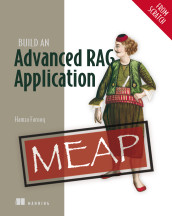
Build an Advanced RAG Application (From Scratch)
An orchestration pattern coordinates multiple processing components and branches their execution into an end-to-end workflow.
- How it is used
- Coordinates query routing, web search, retrieval, and response generation into an end-to-end enterprise RAG workflow.
- How deep it goes
- Descends to Python control flow, route dispatch, embeddings, Qdrant retrieval, and formatted response generation.
- Examples
- Uses OpenAI documentation, 10-K financial queries, web-search questions, and representative routing tests.
- What you can do after
- Build it from scratch by connecting a router to web search, vector retrieval, and cited response generation.
Read how Build an Advanced RAG Application (From Scratch) explains agent orchestration →
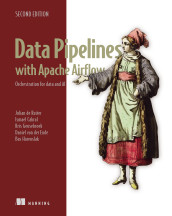
Data Pipelines with Apache Airflow, Second Edition
A container orchestration system is software that coordinates the deployment, execution, scaling, and distribution of containers across multiple machines.
- How it is used
- Coordinates container deployment and scaling across machines, including running Airflow tasks in Kubernetes pods.
- How deep it goes
- Explains Kubernetes components, scheduling considerations, and pods at a high level, but stops short of a full Kubernetes account.
- Examples
- Uses Airflow tasks running in Kubernetes pods and contrasts cluster execution with Docker on a single machine.
- What you can do after
- Apply Kubernetes to run containerized Airflow tasks across worker nodes.
Read how Data Pipelines with Apache Airflow, Second Edition explains agent orchestration →

Podman in Action: Secure, rootless containers for Kubernetes, microservices, and more
A container orchestrator is a system that schedules and manages container workloads across one or more machines.
- How it is used
- Coordinates container workloads across multiple machines by directing container engines to run them on selected nodes.
- How deep it goes
- Distinguishes orchestrators, engines, and runtimes, but stops short of deployment procedures or scheduling internals.
- Examples
- Names Kubernetes, Docker Swarm, and Apache Mesos as orchestrators, with CRI-O and containerd serving Kubernetes.
- What you can do after
- Evaluate whether a workload needs a single-host container engine or a multi-machine orchestrator.
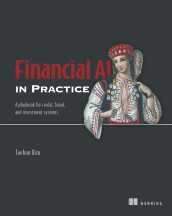
Financial AI in Practice
Orchestration is the coordination and scheduling of multiple tasks, processes, or services in a workflow.
- How it is used
- Coordinates tool use in financial AI systems and dependent stages in production data workflows.
- How deep it goes
- Explains tool selection and pipeline dependencies, retries, scaling, and observability, but provides no orchestration implementation.
- Examples
- Uses document retrieval and live API calls for AI queries, and staged ingestion-to-reporting workflows for quantitative research.
- What you can do after
- Operate production workflows by coordinating dependent stages, retrying failed jobs, scaling resources, and monitoring execution.
Read how Financial AI in Practice explains agent orchestration →
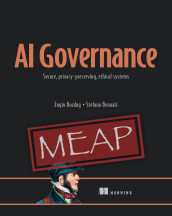
AI Governance
Orchestration is the coordination of multiple agents or system components to carry out a workflow.
- How it is used
- Coordinates multiple agents through a workflow while preserving visibility into decisions and handoffs.
- How deep it goes
- Distinguishes interaction risks and calls for visible steps and human review, without specifying a complete implementation.
- Examples
- Uses a failed claim handoff and colluding rental-pricing algorithms to illustrate interaction risks.
- What you can do after
- Diagnose handoff failures, shared blind spots, and unclear responsibility in multi-agent workflows.

Grokking Software Architecture
Orchestration is the coordination of multiple tasks or operations by a central service that directs when other services act.
- How it is used
- Coordinates tasks in the Application Layer and describes synchronous control of distributed services.
- How deep it goes
- Defines orchestration and its architectural placement, then notes distributed-system brittleness without detailing implementation.
- Examples
- Uses an orchestra conductor, a domino chain, and a phone call to illustrate centralized and synchronous coordination.
- What you can do after
- Evaluate where coordination belongs and recognize the availability risks of synchronous service interactions.
Read how Grokking Software Architecture explains agent orchestration →
Building Reliable AI Systems
The coordination and sequencing of multiple task steps to accomplish a larger objective.
- How it is used
- Coordinates tools and task steps so agents can carry out complex requests rather than only respond to them.
- How deep it goes
- Explains task sequencing, ReAct cycles, and framework trade-offs without detailing orchestration code.
- Examples
- Uses travel planning, stock-price retrieval, and meeting scheduling to illustrate coordinated agent tasks.
- What you can do after
- Apply LangGraph to controlled branching or cyclic workflows, or CrewAI to straightforward linear sequences.
Read how Building Reliable AI Systems explains agent orchestration →
Designing AI Systems
The coordination of agent steps, tools, models, and state to complete a multi-step task.
- How it is used
- Supports GenAI applications requiring multi-step reasoning and external tool integration as an infrastructure layer.
- How deep it goes
- Identifies agent orchestration as an infrastructure layer but does not specify its internal design or implementation.
- Examples
- Contrasts a minimal model API call with the broader infrastructure required by production GenAI applications.
Read how Designing AI Systems explains agent orchestration →
Also covered in
- Architecting an Apache Iceberg Lakehouse
- Collaborative Software Design: How to facilitate domain modeling decisions
- Unit Testing Principles, Practices, and Patterns
- Grokking Simplicity
- Build and Orchestrator in Go (From Scratch)
- Robotics for ProgrammersIn early access (MEAP)
- AI Agents for Offensive SecurityIn early access (MEAP)
- Learn AI Data EngineeringIn early access (MEAP)
- Designing Deep Learning Systems: A guide for software engineers
- Think Distributed Systems
- Snowflake Data Engineering
- Build AI-Enhanced Web Apps
What to know first
- language modelA language model is a computational model that represents patterns in linguistic sequences to assign probabilities, predict, generate, or evaluate language.
- contractA contract is an agreed specification of the conditions, expectations, rights, or obligations that govern behavior or interactions between parties or software components.
- microservice architectureMicroservice architecture is a software architectural style that structures an application as independently deployable services, typically organized around focused capabilities and communicating through defined interfaces.
- AI agentAn AI agent is a computational system that uses artificial intelligence to interpret information and select or perform actions toward goals while interacting with an environment.
Related concepts
- Kubernetesincludes · Kubernetes is an open-source platform for orchestrating containerized workloads and automating their deployment, scaling, and management.
- containeruses · A software container is an isolated execution environment that packages an application and its dependencies, typically sharing the host operating-system kernel.
- distributed systemkind of · A distributed system is a computing system whose components run across multiple networked processes or machines and coordinate through communication.
- Docker Composeincludes · Docker Compose is a tool for defining and running applications composed of multiple containers through declarative configuration.
- AI agentuses · An AI agent is a computational system that uses artificial intelligence to interpret information and select or perform actions toward goals while interacting with an environment.
Questions about agent orchestration
What is agent orchestration?
Agent orchestration is the coordination of agents, their tasks, tools, and interactions to accomplish a larger objective or workflow.
Which Manning books explain agent orchestration?
Generative AI in Action, Grokking AI Applications, AI Agents in Action, Second Edition, Vibe Engineering, Context Engineering, AI Agents and Applications, Effective Platform Engineering, Kubernetes for Developers and 11 more.
What should I know before learning agent orchestration?
Manning books that teach agent orchestration usually introduce language model, contract, microservice architecture and AI agent first.
What kinds of agent orchestration are there?
Kinds of agent orchestration include Kubernetes and Docker Compose.
What is agent orchestration a kind of?
Agent orchestration is a kind of distributed system. A distributed system is a computing system whose components run across multiple networked processes or machines and coordinate through communication.
What is agent orchestration part of?
Agent orchestration is part of context engineering stack. A context engineering stack is a conceptual organization of the core and harness components involved in building context-aware AI systems.
These guides are generated from the text of Manning books by Manning's knowledge graph and link to the sections they draw on. The full books are available on liveBook and at manning.com.