Agent orchestration is a GenAI infrastructure layer for applications involving multi-step reasoning and external tool integration. It sits alongside context assembly, session memory, and real-time knowledge ingestion—capabilities that add production complexity beyond a model API call. section 1.2.2
Figure 1.2 The GenAI Infrastructure Explosion. The model API call now represents just 2% of total system complexity—even less than in traditional ML. Modern GenAI applications require vastly expanded infrastructure: knowledge management systems, safety and compliance layers, session management for conversations, tool integration platforms, advanced observability, and multi-provider model orchestration. This architectural shift explains why simple prototypes become complex production systems.
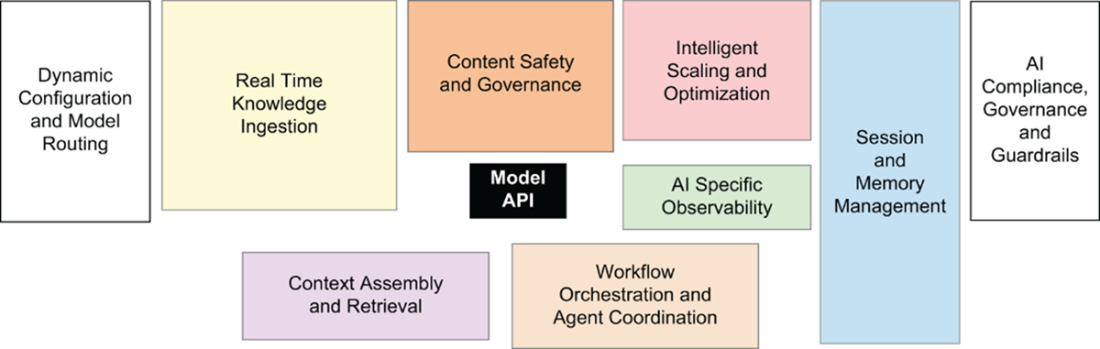
The infrastructure diagram shows how model calls fit within the broader set of systems required by production GenAI applications. section 1.2.2


















