A neural network is a layered computational model that transforms numerical inputs into numerical outputs. Its interconnected neurons assign weights to inputs, apply activation functions, and pass results forward toward a prediction. section 15.2.3
Each neuron acts like a small mathematical cell: it receives numerical information, gives different importance to each input, and produces an output through an activation function. The activation function shapes the neuron's behavior, so choosing it matters. section 15.2.3
A typical neural network organizes computation into three layer types:
- Input layer: passes input features to the first hidden layer. section 15.2.3
- Hidden layers: combine weights and activation functions; their number and size define a critical part of the network's design. section 15.2.3
- Output layer: produces the final predictions, with each neuron corresponding to an output. section 15.2.3
Data flows from one layer to the next in forward propagation. Training, also called fitting, uses a specific optimization algorithm to adjust the network so it can generate useful outputs from its inputs. section 15.2.3 section 15.2.3
Forecasting multiple periods
A network can receive four input features and produce forecasts for two periods: one output neuron represents Period 1 and another represents Period 2. The example makes the connection between network outputs and planning horizons explicit. section 15.2.3
Figure 15.7 Artificial neuron
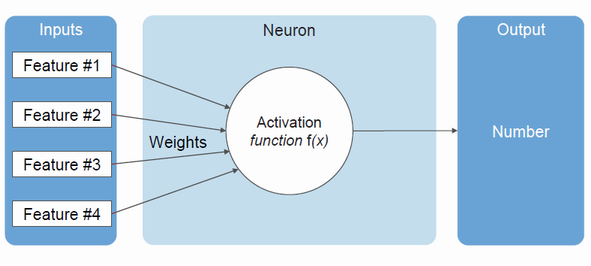
Inspect the artificial-neuron figure to see how numerical inputs, weights, an activation function, and an output fit together. section 15.2.3
Figure 15.8 Artificial neural network
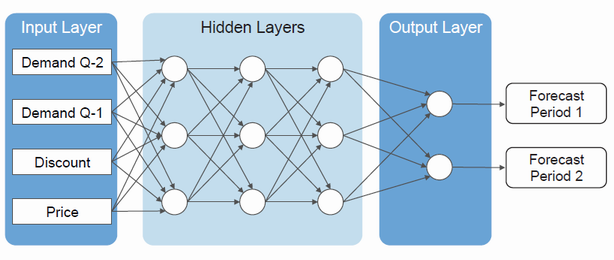
Inspect the network figure to follow the flow from input features through hidden layers to multiple predictions. section 15.2.3



