A content creator, or policy author, is the engineer or architect responsible for creating a policy or policy change for an affected component. The author records the policy’s rationale and implements its logic, while other roles own business relevance, approve intent, review code, coordinate alignment, or audit governance. section 14.3.2
Policy authors operate within a governed life cycle:
- Create or modify policy logic and document the reasoning behind the change. section 14.3.2
- Submit the implementation for code review by a different engineer, preserving separation of duties. section 14.3.2
- Follow shared templates, metadata, version control, testing, deployment, and retirement processes while retaining team-level ownership. section 14.3.1 section 14.6
- Respond to incidents, monitoring results, audit findings, and policy reviews that reveal drift or changing requirements. section 14.6
A governed policy change
Alice authors a policy and records its rationale. Bob reviews the implementation, Carol approves its intent and scope, Renee checks alignment with shared authorization standards, and Arnold later verifies review timing and metadata. section 14.3.2
Figure 14.5 Policy governance workflow across roles. Authorization policies move through clearly defined roles, from creation to deployment and review. Engineers author and review policy logic, managers approve intent and scope, access control coordinators ensure alignment across teams, and auditors verify that governance processes are followed over time. Separation of duties and feedback loops preserve accountability without centralizing control.
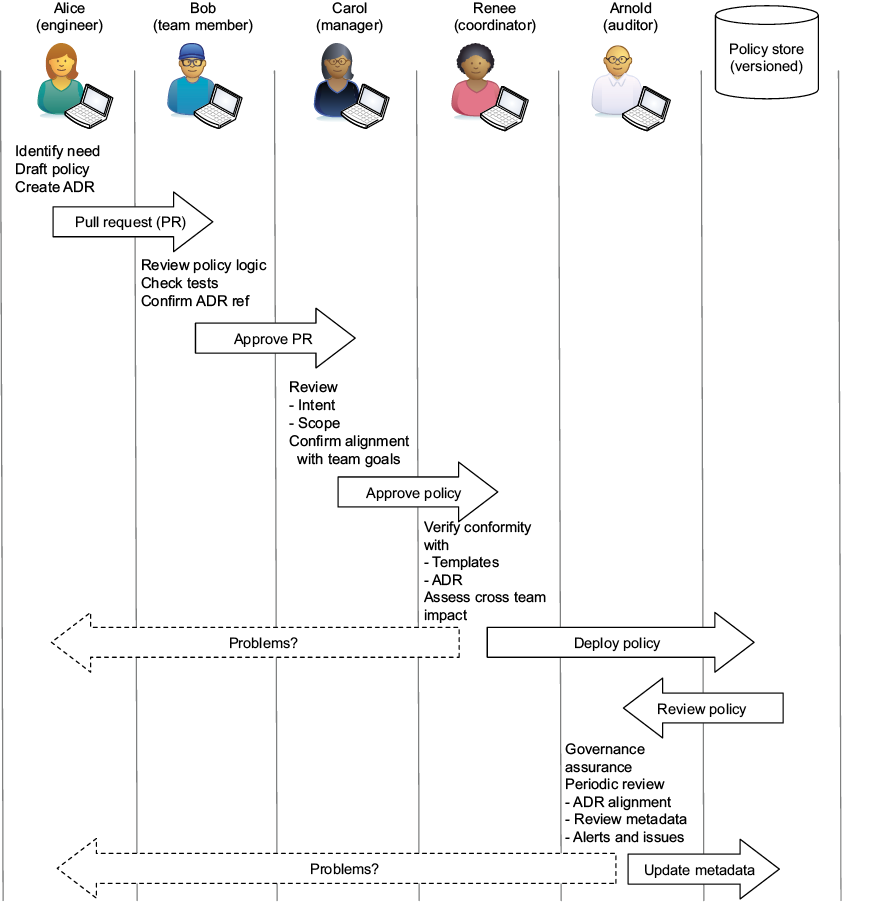
Use the workflow to trace how policy authorship connects implementation, approval, coordination, and ongoing audit without centralizing every decision. section 14.3.2
