An access control model is a framework of rules for deciding who can access which resources and what actions they can perform. It aligns permissions with organizational policies and security needs. section 10.2
The main models differ in who or what determines permissions:
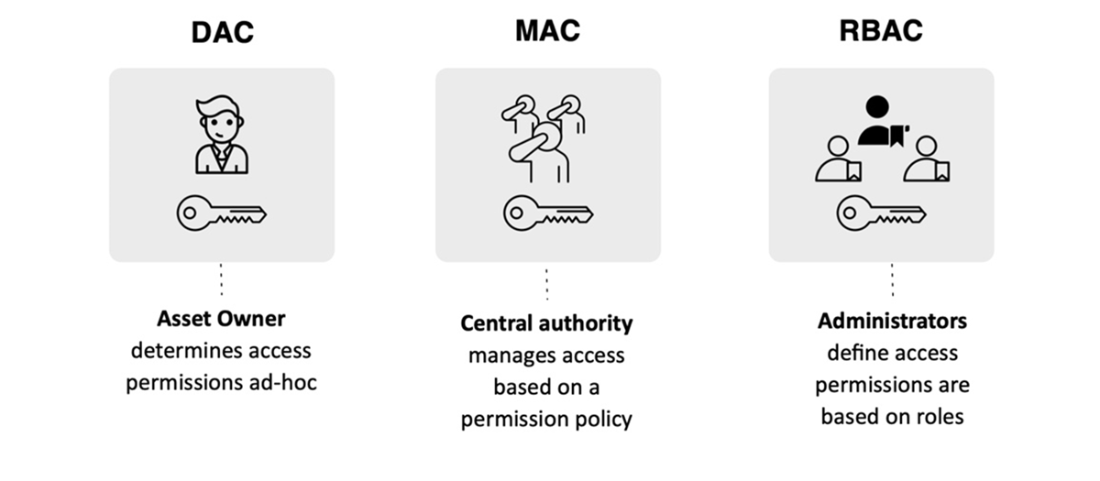
- Discretionary Access Control (DAC) lets resource owners grant or revoke permissions. It is flexible, but can lead to inconsistent enforcement. section 10.2
- Mandatory Access Control (MAC) uses centrally enforced policies, labels, and clearances; users cannot override its rules. section 10.2
- Role-Based Access Control (RBAC) assigns permissions to job-related roles, and users receive access through role membership. section 10.2
- Attribute-Based Access Control (ABAC) evaluates attributes of the user, resource, action, and environment. Policy-Based Access Control (PBAC) makes decisions according to predefined policies. section 10.2
No model suits every organization. RBAC often fits enterprises that need scalable administration; MAC suits high-assurance settings with strict central rules; DAC suits informal sharing where resource owners manage access. section 10.2
Figure 10.1 Summary of access control models arranged by decision authority
Compare the models by who has authority to make access decisions. section 10.2

