Bug
A software bug is a defect that can cause software to behave incorrectly or differently from its intended or specified behavior.
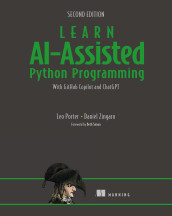
Learn AI-Assisted Python Programming, Second Edition
A software bug is a defect in a program that can cause it to produce incorrect behavior or fail under particular conditions.
- How it is used
- Uses bugs to teach code diagnosis, repair, and deeper understanding of program behavior with Copilot and debugging tools.
- How deep it goes
- Defines syntax and logical errors, demonstrates print-based diagnosis, and applies boundary testing, while deferring extensive low-level implementation detail.
- Examples
- Demonstrates word matching with Dan and danger, boundary counting from 3 to 7, targeted print statements, and corrected Python conditions.
- What you can do after
- Diagnose and fix bugs by testing functions, inspecting code behavior, using targeted output, prompting Copilot, and applying debugger tools.
Read how Learn AI-Assisted Python Programming, Second Edition explains bug →
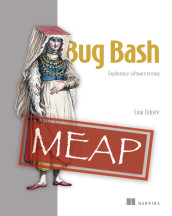
Bug Bash
A defect in software that causes incorrect, unexpected, undesirable, or insecure behavior.
- How it is used
- Uses bugs as the feedback and discovery target for a time-boxed bug bash before a release milestone.
- How deep it goes
- Defines bugs plainly and explains why diverse testers uncover overlooked issues, without detailing technical root-cause analysis or fixes.
- Examples
- Illustrates a login crash caused by a Lithuanian surname containing “ė” and reports companies finding over 100 bugs in 2.5 hours.
- What you can do after
- Evaluate/understand why involving people with varied perspectives can expose bugs before release.
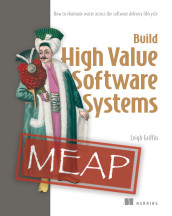
Build High Value Software Systems
A fault in software that can cause incorrect, unreliable, or unintended behavior.
- How it is used
- Classifies bugs as waste when failures, rework, or persistent workarounds consume effort without delivering intended value.
- How deep it goes
- Defines defects, works through a compatibility example, and gives detection heuristics; stops short of a detailed debugging procedure.
- Examples
- Uses a Python expiry check with time-zone assumptions, AI-assisted code review, and a rolled-back deployment.
- What you can do after
- Diagnose/debug with it by identifying hidden assumptions, recurring workarounds, and upstream gaps revealed by escaped defects.
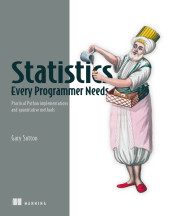
Statistics Every Programmer Needs
A defect is an imperfection or nonconformity that causes a product or unit to fail a specified quality criterion.
- How it is used
- Uses defective-item counts and proportions to monitor process stability and identify observations requiring quality investigation.
- How deep it goes
- Demonstrates definitions, chart selection, control-limit calculations, Python implementation, visualization, and interpretation of out-of-control points.
- Examples
- Uses orange-juice can batches containing physical damage, sealing, labeling, corrosion, and contamination examples.
- What you can do after
- Diagnose/debug with it by selecting an attribute chart, calculating control limits, plotting defects, and investigating unusual observations.

"Looks Good to Me"
An error or flaw in software that can cause incorrect, unsafe, or undesirable behavior.
- How it is used
- Treats bugs as defects to reduce before production through code review and CI/CD, while debating review as the right detection stage.
- How deep it goes
- Distinguishes obvious, subtle, hidden, low-level, and functionality defects but stops short of a general debugging procedure.
- Examples
- Uses a passing-test pull request that retrieves data from the wrong cache as a subtle functionality-defect example.
- What you can do after
- Diagnose bugs with code review by looking for functionality errors that unit tests and the original author missed.
Also covered in
- 100 Java Mistakes and How to Avoid Them
- The Well-Grounded Python Developer: How the pros use Python and Flask
- Test Driven: Practical TDD and Acceptance TDD for Java Developers
- Learn PowerShell Scripting in a Month of Lunches, Second Edition: Write and organize scripts and tools
- Grokking Simplicity
- WordPress Power Toolkit: Harness AI to build next-level websites
- Vibe EngineeringIn early access (MEAP)
- AI-Powered Developer: Build software with ChatGPT and Copilot
- Writing for Developers: Blogs that get read
- Advanced Algorithms and Data Structures
- Julia as a Second Language
- Grokking Software ArchitectureIn early access (MEAP)
What to know first
- software testingSoftware testing is the systematic evaluation of software under specified inputs or conditions to assess its behavior against expected results or requirements and identify defects.
- shell scriptA shell script is a text program containing commands interpreted and executed by a command-line shell.
- conversational aiConversational AI is artificial intelligence that enables software systems to interpret user input and interact with users through natural-language dialogue.
- cognitive loadCognitive load is the mental effort required to process information, retain it in working memory, or perform a task.
Related concepts
- flaky testincludes · A flaky test is a test whose outcome varies across repeated executions under equivalent conditions without a relevant change to the software or test intent.
- side effectincludes · A side effect is an observable change or interaction caused by a computation beyond producing its direct result, such as modifying state or interacting with the external environment.
- software testingaddressed by · Software testing is the systematic evaluation of software under specified inputs or conditions to assess its behavior against expected results or requirements and identify defects.
Questions about bug
What is bug?
A software bug is a defect that can cause software to behave incorrectly or differently from its intended or specified behavior.
Which Manning books explain bug?
Learn AI-Assisted Python Programming, Second Edition, Bug Bash, Build High Value Software Systems, Statistics Every Programmer Needs and "Looks Good to Me".
What should I know before learning bug?
Manning books that teach bug usually introduce software testing, shell script, conversational ai and cognitive load first.
What kinds of bug are there?
Kinds of bug include flaky test, side effect, escaped bug, runtime bug and silent correctness bug.
What is bug also called?
Bug is also called defects.
These guides are generated from the text of Manning books by Manning's knowledge graph and link to the sections they draw on. The full books are available on liveBook and at manning.com.