Workflow
A workflow is an organized sequence of coordinated activities or tasks through which work progresses toward a defined outcome.

Effective Conversational AI
A task flow is an ordered sequence of conversational steps that accomplishes a specific user task.
- How it is used
- Guides a user through the turns needed to complete a task, from recognized intent to a result or handoff.
- How deep it goes
- Works through sequential steps, skipped questions, conditional disambiguation, progress cues, and measurement; leaves fulfillment details outside the cake example.
- Examples
- Contrasts cake-order routing with detail collection and compares five-input claim search with a shorter, conditional flow.
- What you can do after
- Practice/perform workflow simplification by removing unnecessary questions, preserving conditional follow-ups, and tracking completion and opt-outs.
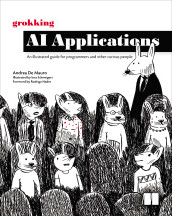
Grokking AI Applications
A workflow is an ordered set of connected processing steps that transforms inputs into outputs within an application.
- How it is used
- Connects processing components to move inputs through GenAI applications or data pipelines toward useful outputs.
- How deep it goes
- Explains component connections through practical examples, while leaving framework-specific technical details aside.
- Examples
- Uses message enrichment, prompt formatting, input filtering, and data loading, joining, and aggregation as workflow steps.
- What you can do after
- Build workflows by connecting visual components in Langflow or data-operation nodes in KNIME.
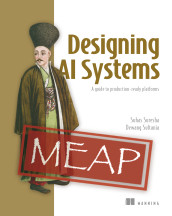
Designing AI Systems
A workflow is a defined sequence of dependent operations that coordinates processing steps and manages their execution state.
- How it is used
- Coordinates dependent platform services behind a managed execution and deployment boundary.
- How deep it goes
- Explains workflow configuration, decorator metadata, and deployment responsibilities while distinguishing the metadata wrapper from managed execution.
- Examples
- Uses a patient assistant that validates requests, retrieves context, invokes models and tools, and checks responses.
- What you can do after
- Operate/configure workflows with deployment metadata for API paths, scaling, resources, and reliability.

Lead Developer Career Guide
A defined sequence of organizational activities for accomplishing a business objective.
- How it is used
- Coordinates development work through a documented process that helps teams work efficiently and communicate clearly.
- How deep it goes
- Develops a step-by-step documentation approach and recurring review schedule without prescribing one fixed workflow.
- Examples
- Uses an onboarding guide covering bugs, code review and merging, testing, and deployment, alongside reviews during and after deployments.
- What you can do after
- Practice/perform workflow documentation and improvement by gathering team input, writing steps, reviewing regularly, and recording changes.
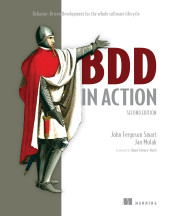
BDD in Action, Second Edition
A business process is an organized sequence of activities that produces a business result.
- How it is used
- Organizes actor activities around goals and outcomes to scope scenarios and automated tests.
- How deep it goes
- Develops workflow boundaries, feature associations, and outcome-first verification; leaves unknown actor tasks marked for confirmation.
- Examples
- Uses flight finding versus booking and sign-up before sign-in to expose boundaries, dependencies, and verifiable consequences.
- What you can do after
- Apply it via a Journey Map to prioritize workflows, identify dependencies, and plan reusable tests with verifiable outcomes.

Grokking Concurrency
A process is an operating-system-managed instance of a running program with its own execution context and resources.
- How it is used
- Uses processes as OS-managed units for allocating resources and isolating concurrent tasks.
- How deep it goes
- Explains process execution context, child creation, and thread trade-offs, while deferring process communication mechanisms.
- Examples
- Illustrates processes with a car analogy, a Python parent creating three children, and prefork server operation.
- What you can do after
- Apply it via Python’s multiprocessing Process to start child processes and identify them by PID.

Rust in Action: Systems programming concepts and techniques
A process is a running program instance with its own execution context and operating-system-managed resources, including an address space.
- How it is used
- Distinguishes processes from threads and containers as ways to organize concurrent work.
- How deep it goes
- Explains process memory isolation and interprocess communication, without implementing either mechanism.
- Examples
- Uses a running executable, network sockets, and a kernel panic to illustrate process creation, communication, and isolation limits.
- What you can do after
- Evaluate process isolation and recognize when communication requires operating-system support.
Read how Rust in Action: Systems programming concepts and techniques explains workflow →
Functional Programming in C#, Second Edition
The example application's sequence of operations composed from functions exposed by lower-level components.
- How it is used
- Models application requirements as sequences of operations composed by a top-level component.
- How deep it goes
- Develops validation pipelines and an error-aware handler, then discusses composition across layers.
- Examples
- Uses a cooking recipe and a server-side money transfer with validation, booking, and persistence.
- What you can do after
- Apply it via C# function pipelines to sequence validation, normalization, and booking operations.
Read how Functional Programming in C#, Second Edition explains workflow →
Road to Kubernetes
A workflow is an automated definition of triggers, jobs, and steps that performs tasks in a software repository.
- How it is used
- Automates repository tasks by running configured code on demand or in response to repository events.
- How deep it goes
- Defines triggers, a job, and steps through a Hello World example, including where the workflow file belongs.
- Examples
- Uses a Python repository and a Hello World workflow that checks out code and runs an echo command.
- What you can do after
- Build it from scratch by writing, committing, and pushing a basic GitHub Actions workflow.

Vibe Engineering
An AI workflow is a recurring work process in which an AI tool performs or assists one or more development tasks.
- How it is used
- Frames AI workflows as development tasks where assistance becomes economically viable as per-interaction costs fall.
- How deep it goes
- Explains the rebound effect and organizational controls, without detailing technical workflow implementation.
- Examples
- Uses commit-message and documentation drafts as lower-value tasks, and developer budgets as a prioritization example.
- What you can do after
- Operate AI workflows with budgets, visible usage costs, and periodic reviews of value against spend.
Think Like a CTO
A defined and repeatable way of organizing work and making decisions within an organization.
- How it is used
- Improves how departments serve clients by making internal work more efficient while preserving familiar practices.
- How deep it goes
- Defines workflows through organizational routines and a spreadsheet example, without offering a formal mapping method.
- Examples
- Compares emailed spreadsheet versions with a shared Google Sheets tracker for client status.
- What you can do after
- Apply small workflow changes, such as moving a shared client tracker to Google Sheets, without disrupting familiar work.
Also covered in
- Elixir in Action, Third Edition
- Designing Deep Learning Systems: A guide for software engineers
- GitHub Actions in Action: Continuous integration and delivery for DevOps
- Azure Security
- Fast Python: High performance techniques for large datasets
- Learn Concurrent Programming with Go
- Building LLM Applications with DSPy
- Human-in-the-Loop Machine Learning: Active learning and annotation for human-centered AI
- Functional Design and Architecture: Examples in Haskell
- Think Distributed Systems
- Cyber Threat Hunting
- First-Party Data Activation
What to know first
- contractA contract is an agreed specification of the conditions, expectations, rights, or obligations that govern behavior or interactions between parties or software components.
- language modelA language model is a computational model that represents patterns in linguistic sequences to assign probabilities, predict, generate, or evaluate language.
- PythonPython is a high-level, general-purpose, dynamically typed programming language with readable syntax and support for multiple programming paradigms.
- containerA software container is an isolated execution environment that packages an application and its dependencies, typically sharing the host operating-system kernel.
Related concepts
- threadhas part · A thread is a distinct sequence of execution with its own control flow and state, managed or scheduled by a processor, runtime, or operating system.
- YAMLuses · YAML is a human-readable data serialization standard for representing structured data, commonly using indentation to express mappings and sequences.
- concurrency primitivekind of · A concurrency primitive is a fundamental language or runtime mechanism for coordinating concurrent execution or controlling access to shared state or resources.
- function compositionimplemented by · Function composition constructs a function by applying one function to the result of another.
- functionhas part · A function is a callable unit of program code that performs a computation or operation, can accept inputs, and may produce a result or side effect.
Questions about workflow
What is workflow?
A workflow is an organized sequence of coordinated activities or tasks through which work progresses toward a defined outcome.
Which Manning books explain workflow?
Effective Conversational AI, Grokking AI Applications, Designing AI Systems, Lead Developer Career Guide, BDD in Action, Second Edition, Grokking Concurrency, Rust in Action: Systems programming concepts and techniques, Functional Programming in C#, Second Edition and 3 more.
What should I know before learning workflow?
Manning books that teach workflow usually introduce contract, language model, Python and container first.
What is workflow a kind of?
Workflow is a kind of concurrency primitive. A concurrency primitive is a fundamental language or runtime mechanism for coordinating concurrent execution or controlling access to shared state or resources.
What are the parts of workflow?
Workflow includes thread and function.
What is workflow also called?
Workflow is also called business process.
These guides are generated from the text of Manning books by Manning's knowledge graph and link to the sections they draw on. The full books are available on liveBook and at manning.com.