A claim-status assistant can fail even when it knows how to find a claim. One voice flow made callers provide five pieces of information before searching and succeeded only 40% of the time. Each extra question created another chance for a retry, an agent request, or an abandoned call. section 8.1.1
A conversational workflow, or task flow, is a sequence of steps that completes a user’s task. Recognizing the user’s intent starts the flow; the assistant then gathers what it needs, takes an action, and delivers the result. Unlike a one-answer exchange, a workflow may need several turns—or a handoff to a person for fulfillment. section 10.1 section 1.1
From routing to a cake order
A routing bot might send an agent only “User wants to order a cake.” A more useful workflow asks for size and occasion, then hands off “User wants to order a large anniversary cake.” If the user already said “large anniversary cake,” it skips those questions. The broader order flow can continue through other details, confirmation, and fulfillment. section 2.2.2
Keep the path to completion as short as the task allows:
- Ask for information when it is needed, not simply because it is available. In claim search, request a claim number only if an initial search returns multiple claims. section 8.1.1
- Accept details the user provides early, and offer clear choices where they help. section 2.2.2
- For a long flow, explain what is needed and signal progress in a way that suits the channel. section 11.3.4
- Mark major flows and steps in analytics so opt-outs can be traced to where users leave. section 11.1.3
Figure 8.2 The updated process to deliver a claim status requires only four pieces of information for most callers. The caller is asked for a fifth piece of information only when necessary.
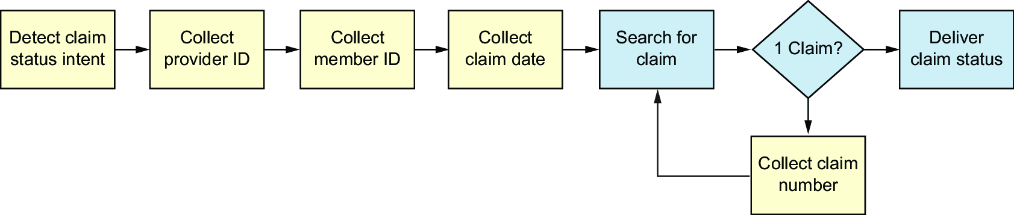
The revised claim-status flow asks most callers for four pieces of information; it asks for a fifth only when needed to distinguish claims. section 8.1.1
A shorter flow still needs checking. Removing the claim-number question for callers with a single matching claim improved task completion and halved claim-number search failures. An LLM can propose or test a workflow, but its suggestions need review: combining two questions may save a turn while making the task harder for someone who has only one answer ready. Use subject-matter expertise before putting such changes into production, and weigh the cost of an incorrect AI judgment. section 8.1.1 section 10.1.2 section 10.4






