A buy-in level communicates how much influence stakeholders have over a decision and how firmly its direction has been set. Framing that level accurately helps people participate appropriately and reduces resistance during implementation. section 9.2 section 9.2.2
Use four levels to state the decision-maker’s intent and the remaining space for influence:
- Idea: present a possible direction as an open question; invite everyone to generate, analyze, influence, or reject options. section 9.2.2
- Suggestion: show clear intentions, investigated options, and a preferred option while remaining open to other insights. section 9.2.2
- Proposal: bring a concrete, worked-out plan; allow only serious objections to influence the decision. section 9.2.2
- Command: communicate a decided course of action together with the responsibilities that follow. section 9.2.2
Frame the conversation before inviting input
Before asking stakeholders to respond, state whether they are helping generate options, reviewing a preferred direction, challenging a worked-out plan, or receiving a decision. Avoid presenting a command as an idea: mismatched framing can produce questions, inaction, sarcasm, gossip, and broader resistance. section 9.2.2
Figure 9.4 Levels of buy-in plotted on the spectrum of democratic and autocratic decision-making styles
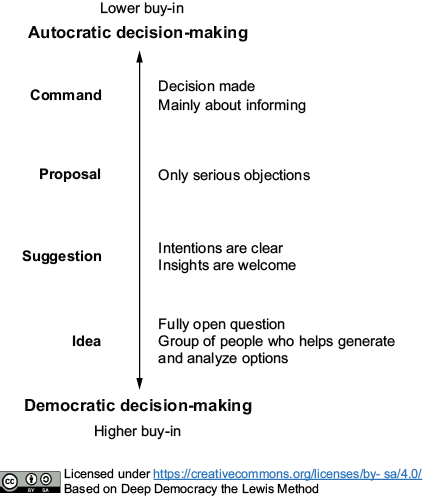
Use the spectrum view to compare the four buy-in levels with democratic and autocratic decision-making styles. section 9.2
