A causal assumption is a claim about variables, relationships, or the data-generating process that must hold when estimating a causal effect. Making these claims explicit exposes missing variables, uncertain relationships, and risks that may otherwise undermine the analysis. section 1.1.4 section 3.2.3
Comparing team effectiveness
Suppose effectiveness is measured as hours per project. Team and Project both affect Efficacy, because teams differ and projects differ in difficulty. Whether Project affects Team depends on how assignments occur: a manager may assign projects, or teams may choose them. That uncertainty changes the arrows in the causal graph and therefore the assumptions behind the estimate. section 3.2.3
Make causal assumptions workable by:
- Listing variables that may participate in the data-generating process, consulting domain experts to reduce the risk of omitted confounders. section 3.2
- Drawing arrows between variables, then stating the model’s main assumptions and limitations clearly. section 3.2
- Checking whether the data contain enough treatment variation, including positivity for each confounder pattern. section 3.2
- Reviewing disputed arrows and documenting imperfect measurements or proxies, such as Google Trends for popularity. section 3.2.3
Figure 3.8 Graph representing the situation in which groups do not choose which project they will work on
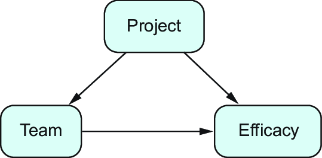
Compare the graph where groups do not choose projects with the alternative where groups choose them; the assignment mechanism changes the causal assumptions. section 3.2.3

