liveBook · Manning

Centralized decision-making

As explained in Microservices Patterns, Second Edition

Centralized decision-making is an organizational arrangement in which architectural decisions are made by a central person or group rather than by the development teams.

Centralized decision-making places architectural authority with a person or group outside the development teams. It can help when teams are paralyzed by indecision, but risks poor decisions, delays while teams wait for answers, and weak buy-in when decisions are imposed. Moving decisions to teams avoids this bottleneck. section 3.4.2

Figure 3.18 The four options for who does architecture: benevolent dictator, architect in the team, architecture done by team members, and implicit architecture - image from https://architectelevator.com/architecture/organizing-architecture/
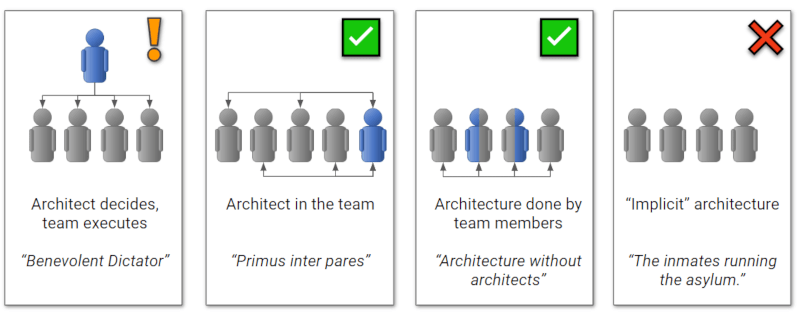
who does architecture from architect elevator

Compare centralized decisions with embedded architects, team-member decision-making, and implicit architecture. section 3.4.2


How Microservices Patterns, Second Edition covers it

How deep it goes
Defines the arrangement and identifies three drawbacks, then contrasts it with team-based approaches.
Examples
Compares four arrangements: a benevolent dictator, embedded architects, team-member decisions, and implicit architecture.
What you can do after
Evaluate when centralized architectural authority may help and weigh its risks against team-based decision-making.
How it connects
Contrasts centralized decision-making with embedded architects, team-based architecture, and implicit architecture.

Also explained in

Compare how 2 books explain centralized decision-making →

Related concepts

This explainer was generated by Manning's knowledge graph from the text of Microservices Patterns, Second Edition. The section links point to the parts of the book it draws on.