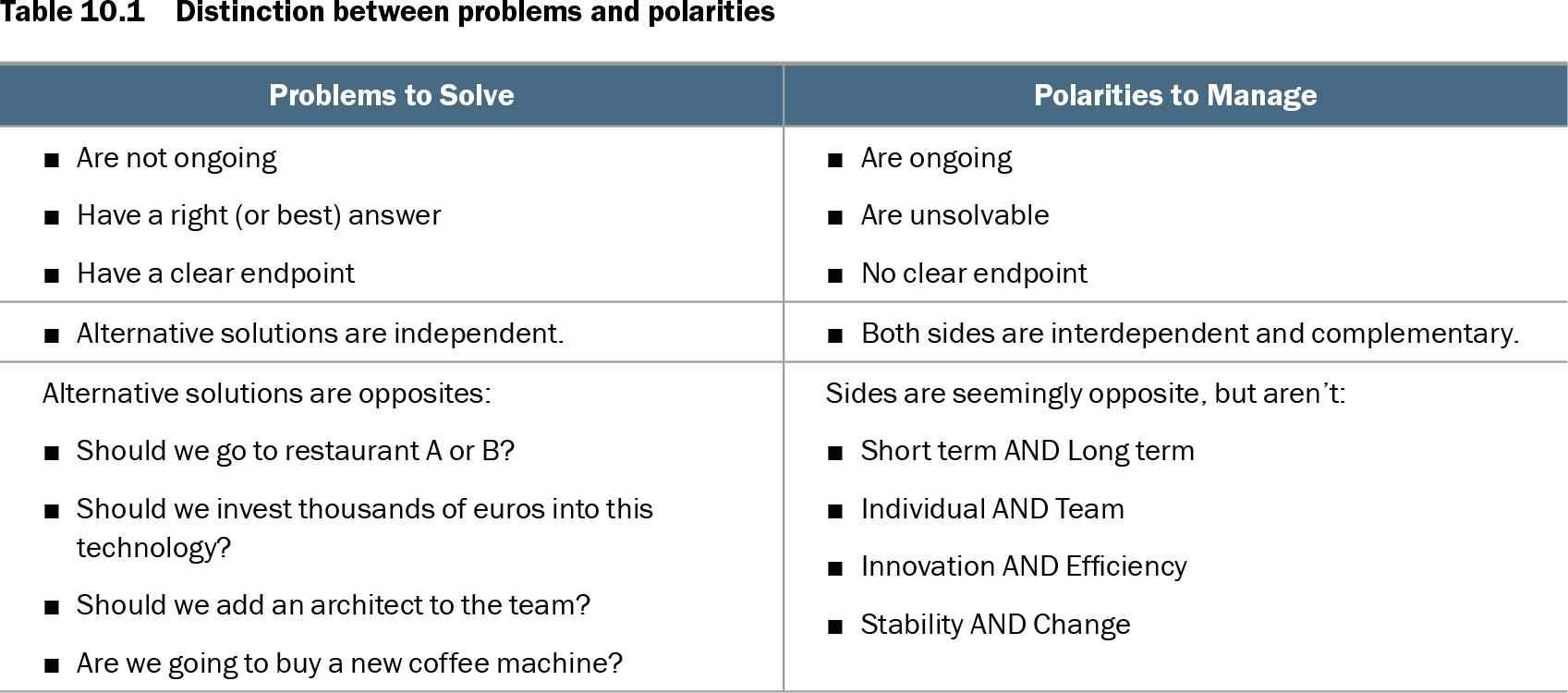
A polarity is an ongoing tension between two seemingly opposite positions that are complementary and interdependent. Unlike a problem with a best answer and endpoint, it cannot be settled by permanently choosing one side. It calls for both/and management: use each side when its benefits are needed, while avoiding the costs of staying there too long. section 10.1 section 10.1.2
In collaborative work, polarities often masquerade as conflicts: start coding or continue modeling, seek stability or embrace change, prioritize short-term delivery or long-term goals. Treating such a tension as an either/or debate can intensify conflict, because advocates of each pole see its benefits and fear the other pole’s downsides. section 10.1.1 section 10.1.4
Recognize and manage a polarity with the group:
- Ask whether the difficulty is ongoing, lacks a clear endpoint, and requires both sides. If so, manage it rather than solve it. section 10.1.2
- Make the tension explicit, validate it with participants, and decide together whether examining it now adds value. section 10.1.3
- Map the upsides and downsides of both poles to create a shared, complete view rather than a contest over who is right. section 10.2
- Agree on observable, context-specific signals that show a group has stayed in one pole too long, then define actions that move it toward the other. section 10.2.2
Collaborative modeling versus coding
A team may argue over whether to implement now or keep modeling. Coding tests feasibility in production; modeling can prevent expensive refactoring. Map the positive and negative effects of each, then agree on signals. For example, code needing many explanatory comments can signal a return to detailed modeling; discussion focused mainly on technical aspects can signal time to implement. section 12.3.1
Facilitation matters because a polarity is also social. Use neutral observation, a climate report, or polarized sensemaking questions to surface different perspectives. Bring minority views in early, avoid imposing a permanent answer, and turn the group’s discoveries into shared agreements about when to shift poles. section 10.3.2 section 10.7
Table 10.1 Distinction between problems and polarities (view table figure)
| Problems to Solve |
Polarities to Manage |
|---|---|
|
|
|
|
| Alternative solutions are opposites:
|
Sides are seemingly opposite, but aren’t:
|
Compare solvable problems with ongoing, interdependent polarities before deciding whether the group needs an answer or a way to alternate between poles. section 10.1.2