liveBook · Manning

Change request

As explained in Fundamentals of Cybersecurity

A request for change is a formal proposal describing a proposed system modification, its purpose, benefits, resources, risks, and rollback strategy.

A change request (RFC) is a formal proposal for modifying a system. It starts the change management process and describes the change, its purpose, expected benefits, required resources, potential risks, and a preliminary rollback plan. section 15.7

A formal request helps prevent ad hoc changes that may be inadequately tested or lack a recovery strategy. It gives stakeholders information to assess a change before it is approved, tested, and implemented. section 16.7

A request records:

  • What change is proposed and why, including its expected benefits. section 15.7
  • The resources required and potential risks. section 15.7
  • A preliminary plan for restoring the system if the change fails. section 15.7
Figure 15.1 Illustration of Change Management Components
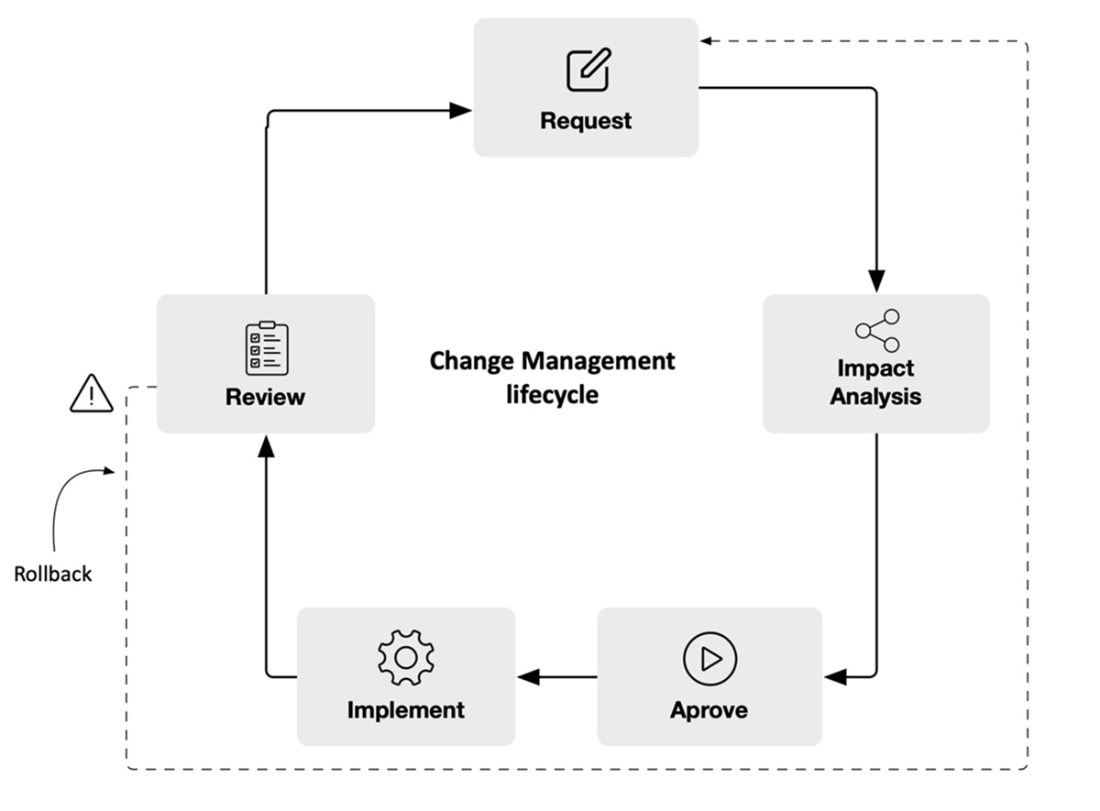
Use the lifecycle diagram to see how a request leads into impact analysis, approval, testing, implementation, and review. section 15.7


How Fundamentals of Cybersecurity covers it

How deep it goes
Specifies the proposal’s purpose, benefits, resources, risks, and rollback plan without prescribing a request format.
Examples
Uses patches for actively exploited vulnerabilities to illustrate emergency changes requiring documentation and review.
What you can do after
Apply it by documenting a proposed change, its rationale, resource needs, risks, and preliminary recovery strategy.
How it connects
Links to change management, impact analysis, approval, testing, and rollback planning.

Also explained in

Compare how 3 books explain change request →

Related concepts

This explainer was generated by Manning's knowledge graph from the text of Fundamentals of Cybersecurity. The section links point to the parts of the book it draws on.
