A circular dependency forms when components depend on one another in a closed loop—for example, when Layer A depends on B and B depends on A. In a layered system, an infrastructure component calling the UI directly can create this upward dependency. section 4.3.2
The cycle makes the system brittle and hard to understand. A clearer route is for infrastructure to return data to the Application Layer, which decides how to notify the presentation layer. section 4.3.2
Repository calls the UI
A repository that saves data and directly updates a presentation-layer status label couples data access to the UI, making isolated testing harder. section 4.3.2
Figure 4.5 In a clean architecture, dependencies must only flow downward to the adjacent layer. Breaking this rule by "skipping" layers or creating upward dependencies (e.g., the Infrastructure Layer talking directly to the UI) creates a tangled web that makes the system impossible to test or modify without breaking everything.
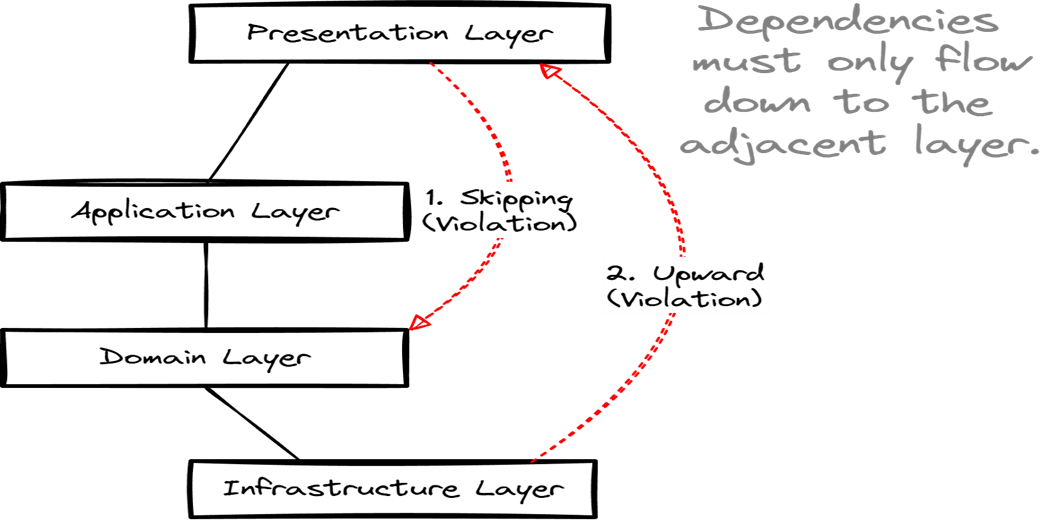
Use the figure to see how upward dependencies can tangle layers that should depend downward. section 4.3.2






