Cognitive workload is the mental effort and working memory needed to understand information, solve problems, and make decisions. Accessible design can reduce it so people can complete tasks more efficiently. section 6.0
Form design can reduce mental effort by:
- Grouping related fields and sequencing them logically, so users can understand the form at a glance. section 6.1.10
- Making content readable; low contrast can force people to slow down, strain, or skip information. section 3.1
- Providing validation at useful moments rather than interrupting users with frequent errors while they are typing. section 6.1.6
Figure 6.7 Labeled input fields are organized in logical groups using fieldsets and a legend to provide context. Mandatory fields are also clearly marked, and instructions are also provided wherever necessary. The form has an accessible name that references the preceding level-2 heading via aria-labelledby.
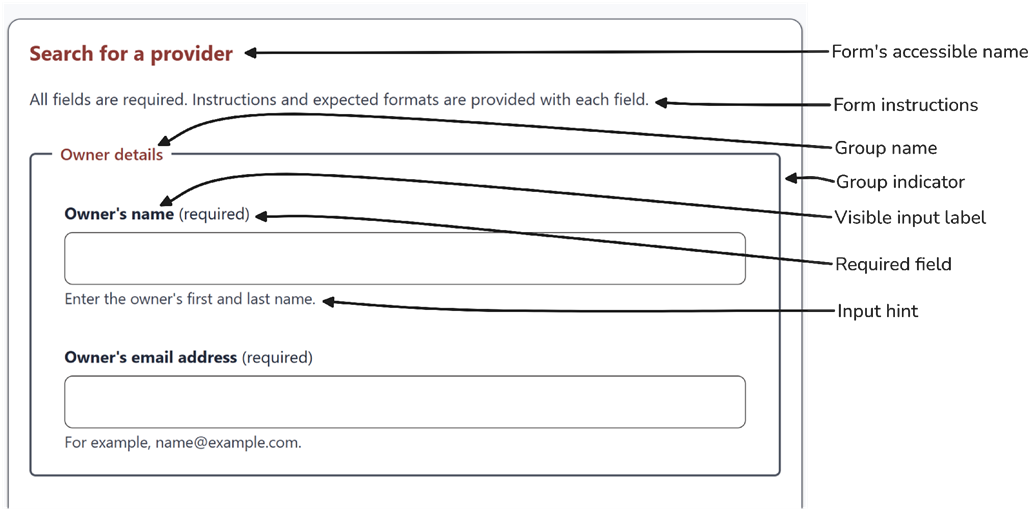
The form groups owner, dog, and complaint details with fieldsets and a legend, making its structure easier to grasp. section 6.1.10