Cohort analysis groups participants by meaningful shared characteristics and tracks a selected measure over time. Cohorts may reflect changing characteristics, such as age or subscription year, or static characteristics, such as school attended or subscription tier. section 3.2.4
Use cohort analysis to:
- Combine within-subjects and between-subjects comparisons to reveal trends that a simple before-and-after comparison could miss. section 3.2.4
- Compare mutually exclusive groups without random assignment, identifying measurable differences in their trends over time. section 3.2.4
- Distinguish cohort comparisons from experiments: observed differences in trends do not by themselves isolate an independent variable as the cause. section 3.2.4 section 3.4
Tracking age cohorts
Measure blood pressure weekly for twelve weeks across three age cohorts. The repeated observations show how each cohort changes and whether their trends differ. section 3.2.4
Figure 3.12 Cohort comparisons evaluate meaningful cohort groups over time.
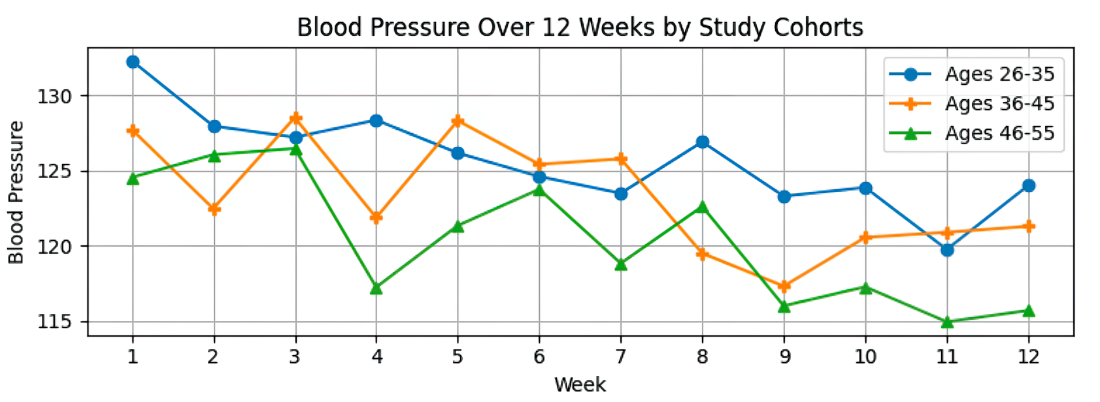
Use the figure to distinguish cohort comparisons from other comparison designs and to see the role of tracking groups over time. section 3.2.4
