Collaborative problem solving is a joint way to resolve disagreement by addressing both parties’ concerns while protecting shared goals, project integrity, and professional relationships. It focuses on underlying interests rather than fixed positions. section 14.1.3
Use the process when a disagreement affects people or the project:
- Identify the issue and explain its effect on the person or project. section 14.1.3
- Set aside uninterrupted time for respectful discussion and active listening. section 14.1.3
- Explore several solutions that address concerns without compromising integrity. section 14.1.3
- Agree on actions and a timeline, then review the result and adjust if needed. section 14.1.3
Resolving a proposed change
When a requested change creates a disagreement, the parties describe how it affects the project, discuss their underlying needs, compare possible solutions, agree on an acceptable action and deadline, and revisit the outcome later. If the request crosses professional or personal boundaries, they can seek external mediation. section 14.1.3
Figure 14.1 Conflict-resolution process diagram
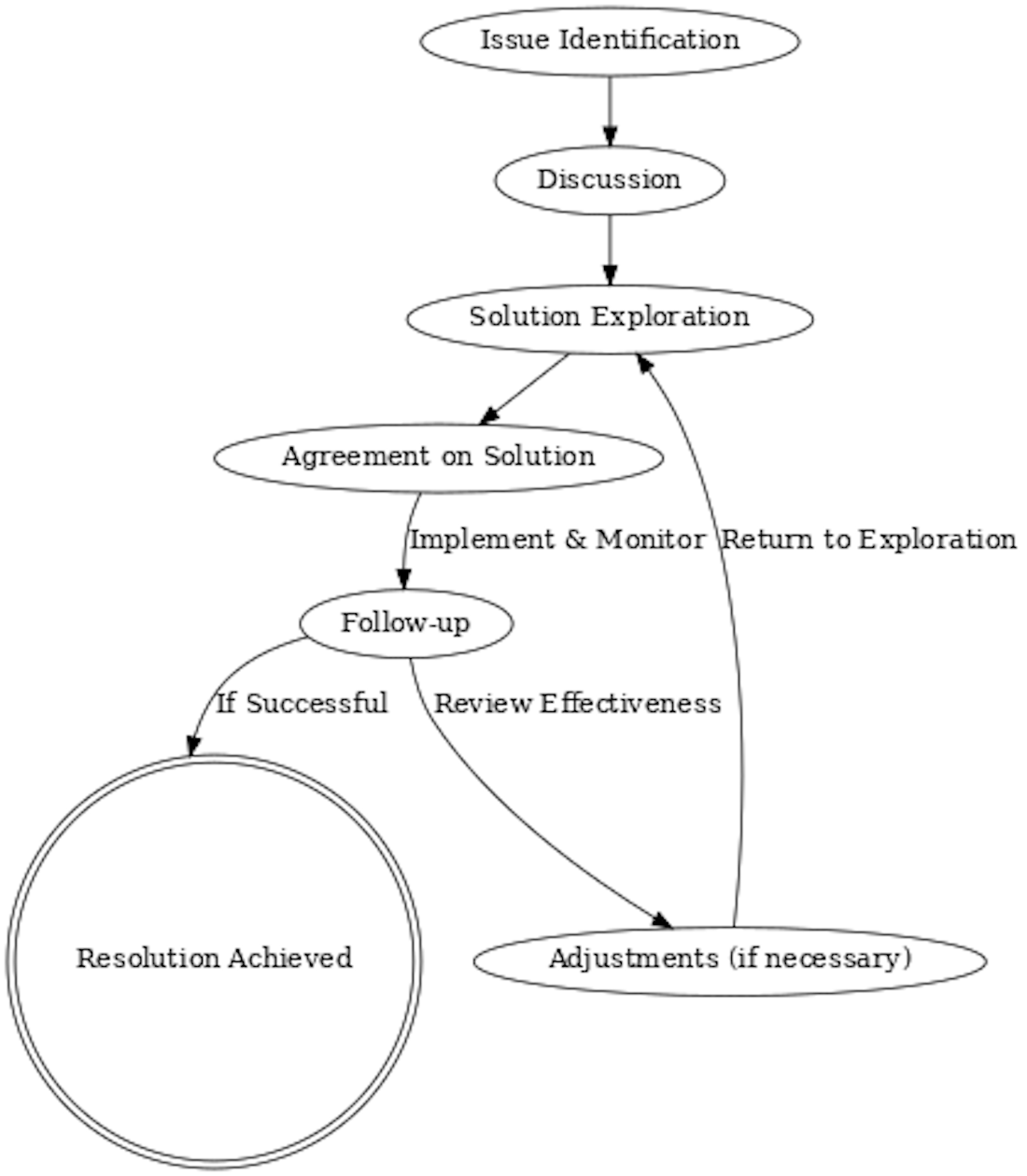
Follow the conflict-resolution process from issue identification through discussion, solution exploration, agreement, and follow-up. section 14.1.3

