liveBook · Manning

Commitment

As explained in Build High Value Software Systems

A lasting investment in software work or artifacts that makes change, replacement, or deletion costly.

Commitment is the future effort tied to software work or artifacts: the harder something is to understand, change, replace, or delete, the more it commits the team. Generated code that must be reviewed, debugged, and maintained carries more commitment than an artifact that can be cheaply regenerated or discarded. section 3.2.2

Commitments also include non-ticket work that uses time otherwise available for focused work. Make that work visible and include it in capacity planning; otherwise, ticket plans can assume time that is not actually available. section 14.4.1

Two kinds of commitment

A disposable generated artifact can be replaced cheaply, keeping its commitment low. A week with eight hours reserved for reviews, mentoring, or knowledge sharing has less ticket capacity than a five-day week; make those hours visible when planning. section 3.2.2 section 14.4.1

Figure 3.4 Low effort + low commitment = Lean AI usage.
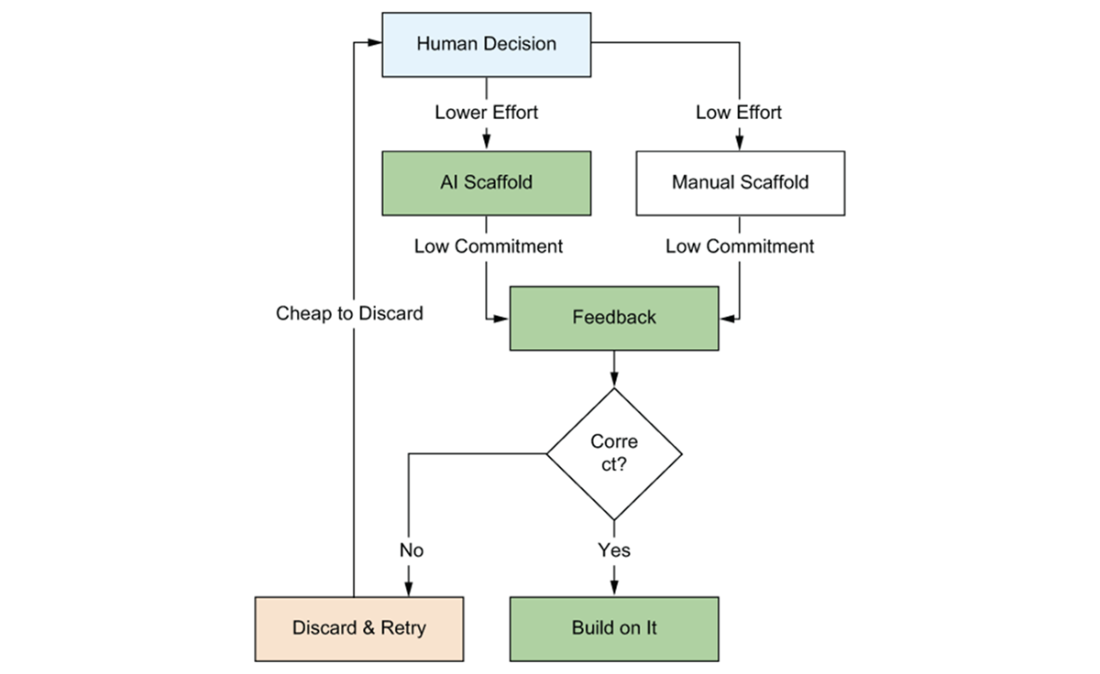
Use the figure’s low-effort, low-commitment lens to assess whether an AI-assisted task reduces work without adding lasting maintenance cost. section 3.2.2

How Build High Value Software Systems covers it

How deep it goes
Defines commitment through artifact maintenance and replaceability, then applies it to workload planning and visibility.
Examples
Contrasts regenerable artifacts with maintained code and uses reviews, mentoring, and knowledge sharing as non-ticket commitments.
What it assumes
Assumes ticket-based work and AI-assisted development, while explaining commitment through familiar planning and maintenance concerns.
What you can do after
Evaluate AI-assisted artifacts by their ongoing maintenance cost and plan ticket capacity around visible non-ticket work.
How it connects
Connects commitment to Lean, AI-assisted development, work-in-progress limits, and capacity planning.

Related concepts

This explainer was generated by Manning's knowledge graph from the text of Build High Value Software Systems. The section links point to the parts of the book it draws on.