Compassion is concern for another person’s suffering combined with a willingness to help when that help is wanted. In collaborative modeling, it means recognizing shared humanity, making room for different perceptions, and resisting the impulse to become the powerful problem solver. section 5.2.3
Use compassion to shape how a facilitator relates to people and their perspectives:
- Give space to perceptions that seem strange or wrong instead of judging them immediately. section 5.2.3
- Recognize that groups and cultures assign meaning to experiences, so disagreement does not automatically make one perception inherently right or wrong. section 5.2.3
- Distinguish compassion, or empathic concern, from empathic distress, which feels another person’s upset without motivating help. section 5.2.3
- Treat compassion as learnable: self-awareness, reflection, feedback, curiosity, and diverse environments can strengthen it. section 5.2 section 5.2.4
Figure 5.3 The link between facilitation skills and core competencies. Core competencies consist of Compassion, Neutrality, and Observing, and they are fundamental yet require self-awareness and adaptability across cultures. These competencies enhance the facilitation skills of Holding Space, Active Listening, and Clear Communication, which can be improved through study and practice.
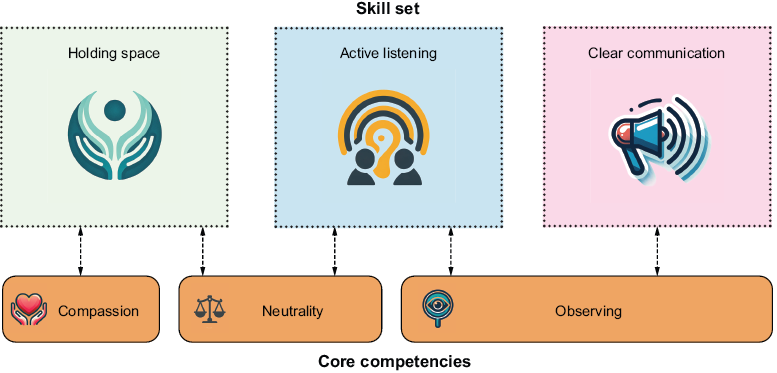
Map compassion alongside neutrality and observing, then connect these competencies to holding space, active listening, and clear communication. section 5.2
During collaborative modeling
When a participant expresses a perception that feels unfamiliar or incorrect, acknowledge the person’s struggle and leave room for their view. Offer help only if wanted, while allowing the group to examine the meaning it has assigned to the issue. section 5.2.3
