Holding space gives people a safe opportunity to voice ideas, opinions, concerns, problems, and emotions during collaborative modeling. It respects different communication preferences without requiring everyone to speak, interrupt, or tell stories in the same way. section 5.3.3
The facilitator protects this environment by listening without rushing toward solutions, withholding unsolicited advice, acknowledging feelings, and using clean language or Socratic questions. Neutrality, observing, and compassion support the practice, while holding space strengthens compassion and neutrality. section 5.2 section 5.3.3
Use these moves when a participant raises an idea, concern, or strong emotion:
- Give the person full attention and avoid interrupting or offering solutions. section 5.6
- Invite elaboration with an open-ended, empathetic question such as “Can you tell me more about what you just shared?” section 5.6
- Summarize what you heard and check that your understanding is accurate. section 5.6
- Ask neutral questions about agreement and difference, and remain comfortable with silence. section 5.6
- Model differing visions separately, name each model for easy reference, and ask whether others share or challenge them. section 5.3.3
Two competing visions
When participants describe different visions, model both rather than forcing an early decision. Name each model, ask who recognizes their view in it, and model another view when needed. The group can then examine differences without treating disagreement as a mistake. section 5.3.3
Figure 5.8 When people have a different vision or idea on something, model both ideas. Give the model a name so you can easily refer to it. Ask the group if anyone has the same opinion. If somebody has another opinion, model that one too.
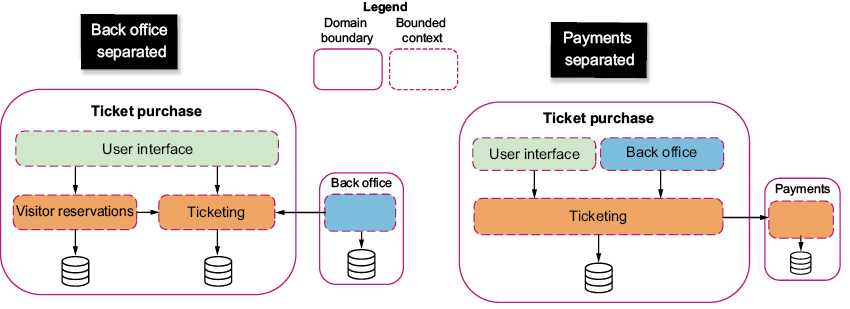
Use the figure as a visual reminder to preserve multiple ideas, name them, and invite further perspectives instead of collapsing disagreement. section 5.3.3
