Neutrality is a facilitation stance: make room for every participant’s perceptions, opinions, emotions, and concerns without prematurely aligning with one view. Complete neutrality is unattainable, but striving for it helps people feel treated as “equally different”—recognized and respected in their differences. section 5.2.1
Its purpose is psychological safety. Participants should be able to offer ideas, questions, concerns, and mistakes without punishment or humiliation. Safety does not require comfort: tense conflict can be productive, provided it does not become unsafe. Listening to a concern does not mean accepting it; it means ensuring the group hears and understands it. section 5.2.1
Figure 5.3 The link between facilitation skills and core competencies. Core competencies consist of Compassion, Neutrality, and Observing, and they are fundamental yet require self-awareness and adaptability across cultures. These competencies enhance the facilitation skills of Holding Space, Active Listening, and Clear Communication, which can be improved through study and practice.
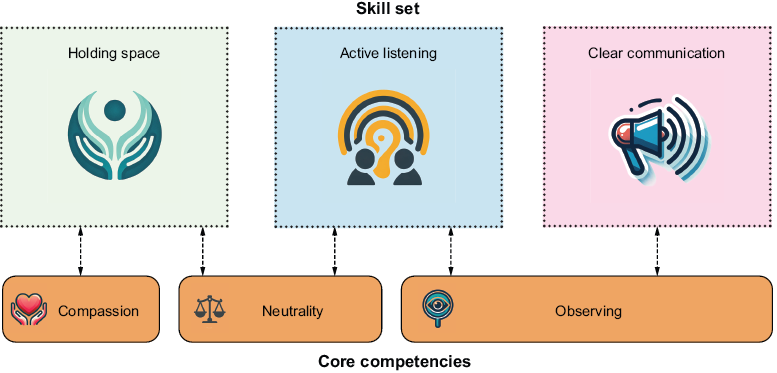
Neutrality is one of three mutually reinforcing facilitator competencies. Holding space and active listening build it; alongside compassion and observing, it strengthens clear communication and adaptable facilitation. section 5.2 section 5.9
Practice neutrality through deliberate habits:
- Notice the urge to react to an opinion, write it down, and reflect after the session rather than responding from that reaction. section 5.2.1
- Favor passive participation at the start, remain humble and open, and shift toward more active participation as the group progresses. section 6.5
- Record ethnographic field notes, including personal “shadows,” to reflect on assumptions that can pull facilitation away from neutrality. section 6.5
- Establish group-agreed safety rules when working agreements are unclear, so the group can refer to them when safety is broken. section 6.5
When neutrality conflicts with the session goal
A group mapping a value chain divided over whether to revisit user needs or continue toward identifying team-owned streamlets. The facilitators first asked why deeper exploration mattered and invited both views. Because the polarity threatened the agreed goal and most participants favored continuing, they made a proposal: proceed now, then schedule a deeper follow-up if needed. Neutrality does not forbid intervention when the session needs direction; it requires making the competing concerns visible. section 10.3.2
Neutrality is affected by rank, culture, and how others perceive the facilitator. A CEO facilitating employees, a facilitator working across cultures, or someone whose leadership is not accepted may have less room to act neutrally. Treat it as a learnable practice requiring self-awareness, not a personality trait or a guarantee of equal outcomes. section 5.2.4 section 5.2
