Conflict resolution addresses disagreement between people or teams before it grows into a larger workplace or technical problem. AI can provide neutral, fact-based suggestions that shift attention from winning an argument to finding a workable solution. section 14.0
A practical approach combines immediate response with advance planning:
- Address disagreements rather than avoiding them; unresolved tension can create larger problems. section 14.0
- Create ground rules while everyone is calm, covering how to handle disagreements, what counts as a reasonable request, and how to raise concerns respectfully. section 14.1.3
- When using AI, provide each party’s position, concerns, and reasons without taking sides; review the suggested resolution instead of accepting it automatically. section 14.1.3
- Use AI to detect early warning signs, support difficult conversations, and prepare crisis communications when conflict becomes part of a wider emergency. section 14.4 section 16.6
A deadline dispute
A developer was asked to produce temporary replication code quickly and argued for time to build a reliable solution. After an initially heated exchange, the lead acknowledged that the deadline could move. AI can help analyze a similar disagreement by receiving the full exchange, each person’s concerns, and the reasons behind each position, then comparing the arguments and proposing shared rules for future requests. section 14.0 section 14.1.3
Figure 14.1 Conflict-resolution process diagram
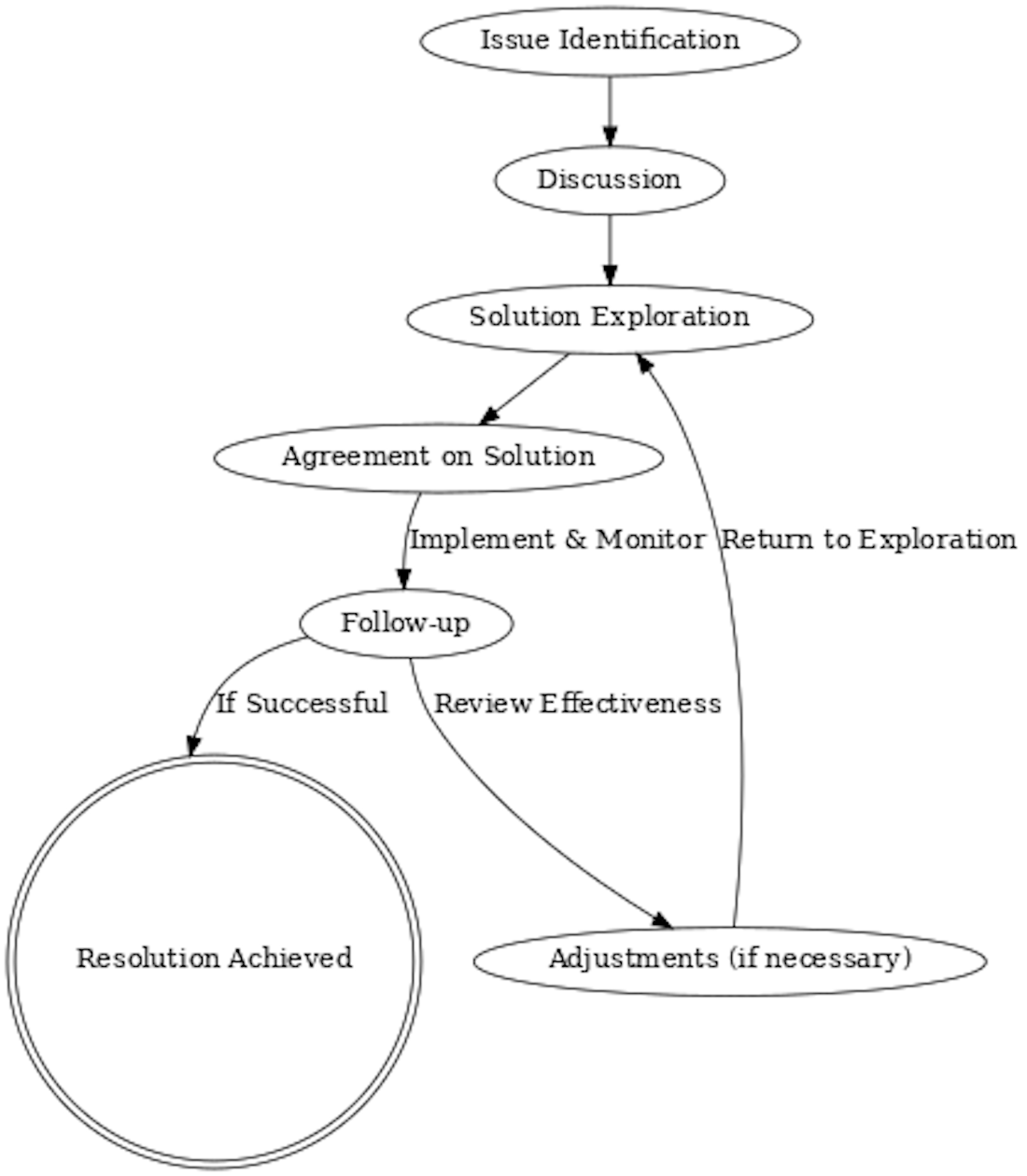
Use the conflict-resolution process diagram as a visual reminder of the movement from disagreement toward a constructive outcome. section 14.1.3



