Authenticity establishes that a message or digital entity is genuine and originated as claimed. It extends integrity: integrity detects modification, while authenticity links the data to an entity that controlled it. section 1.1 section 1.2.3
Signed login token
After a successful login, a website signs a token containing the username. On later visits, it verifies the signature and trusts that it issued the token, allowing the token to authenticate the user without another password. section 1.2.3
Cryptographic mechanisms implement authenticity in different ways. A MAC uses a shared secret to authenticate messages, but poorly designed secret-prefix or secret-suffix constructions can enable attacks such as length extension. HMAC is designed to resist length-extension and collision attacks. Digital signatures provide asymmetric authenticity: anyone with the public key can verify a message, but only the private-key holder should create signatures. section 7.0 section 9.2
A valid authenticity check supports trust only when the cryptographic scheme and implementation remain secure. Signature forgery attacks, reused ECDSA nonces, and vulnerable padding can defeat that assumption; verification alone does not let verifiers create signatures. section 9.2 section 9.0
Figure 1.1 Security goals of cryptography
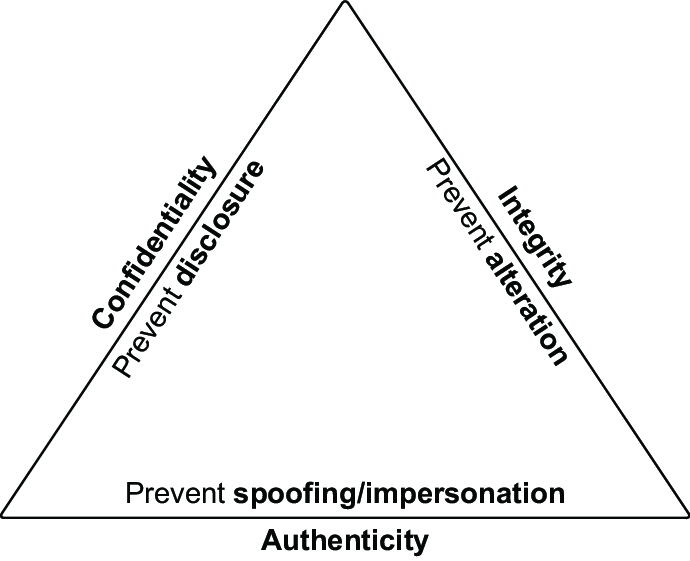
Use the security-goals diagram to distinguish authenticity from confidentiality and integrity. section 1.1



