Context recall
Context recall is a retrieval-quality metric measuring how completely retrieved context contains the relevant information needed to answer a query or question.
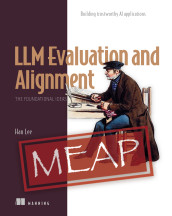
LLM Evaluation and Alignment, The Foundational Ideas
Context recall is a retrieval-quality metric measuring whether retrieved context contains the specific claims or information needed to produce the answer.
- How it is used
- Diagnoses missing answer-relevant information in retrieved context before interpreting generation quality.
- How deep it goes
- Explains sentence-level attribution and score calculation, while noting that recall alone cannot expose every agentic reasoning gap.
- Examples
- Calculates a 0.60 score for a financial assistant whose retrieved reports cover three of five reference claims.
- What you can do after
- Apply context recall through RAGAS to identify missing reference-answer information in retrieved context.
Read how LLM Evaluation and Alignment, The Foundational Ideas explains context recall →
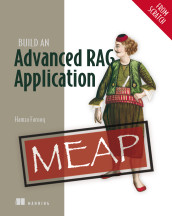
Build an Advanced RAG Application (From Scratch)
Context recall measures how completely retrieved documents cover the information relevant to a query.
- How it is used
- Evaluates whether retrieval supplies all relevant information required by a RAG query.
- How deep it goes
- Defines retrieval coverage and positions it within RAGAS, without detailing a calculation procedure or implementation.
- Examples
- Situates context recall within RAG evaluations spanning travel recommendations and academic literature analysis.
- What you can do after
- Evaluate retrieval coverage and compare RAG configurations using a component-level or composite RAGAS assessment.
Read how Build an Advanced RAG Application (From Scratch) explains context recall →
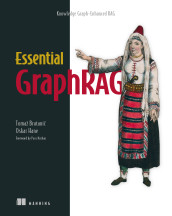
Essential GraphRAG
Context recall is a retrieval metric that measures how much of the information needed to answer a question is present in the retrieved context.
- How it is used
- Measures retrieval coverage within a RAG benchmark alongside answer correctness and faithfulness.
- How deep it goes
- Defines sentence-level support judgments and demonstrates benchmark scoring, but does not detail the metric’s internal calculation.
- Examples
- Uses benchmark datasets, Cypher-derived ground truths, retrieved contexts, and a reported score of 0.7941.
- What you can do after
- Diagnose retrieval gaps and prioritize improvements to retrieval, query reformulation, or entity mapping.
Also covered in
What to know first
- recallRecall is the proportion of all relevant or actual positive items that a system successfully retrieves or correctly identifies.
- similarity searchSimilarity search is a retrieval technique that finds or ranks items by their similarity to a query, often by comparing feature or vector representations under a similarity or distance measure.
- precisionPrecision is the proportion of items predicted, selected, or retrieved as positive that are correct or relevant.
- context windowA context window is a bounded span of sequence elements or contextual information that a model or processing operation can consider together.
Related concepts
- labeluses · A label is a target value, category, or reference annotation associated with an example for learning, prediction, or evaluation.
- objective functionkind of · An objective function is a mathematical function that assigns values to candidate solutions or parameter settings, which an optimization procedure seeks to minimize or maximize.
- Ragaspart of · Ragas is an open-source framework and Python library for evaluating retrieval-augmented generation systems and applications.
- retrieved documentuses · A retrieved document is information selected by an information-retrieval process from a source and supplied as context or evidence for a query or task.
- recallcontrasts with · Recall is the proportion of all relevant or actual positive items that a system successfully retrieves or correctly identifies.
- reference-based evaluationuses · Reference-based evaluation assesses an output by comparing it with one or more reference examples or answers that represent desired output.
Questions about context recall
What is context recall?
Context recall is a retrieval-quality metric measuring how completely retrieved context contains the relevant information needed to answer a query or question.
Which Manning books explain context recall?
LLM Evaluation and Alignment, The Foundational Ideas, Build an Advanced RAG Application (From Scratch) and Essential GraphRAG.
What should I know before learning context recall?
Manning books that teach context recall usually introduce recall, similarity search, precision and context window first.
What is the difference between context recall and recall?
Context recall is a retrieval-quality metric measuring how completely retrieved context contains the relevant information needed to answer a query or question. Recall is the proportion of all relevant or actual positive items that a system successfully retrieves or correctly identifies.
What is context recall a kind of?
Context recall is a kind of objective function. An objective function is a mathematical function that assigns values to candidate solutions or parameter settings, which an optimization procedure seeks to minimize or maximize.
What is context recall part of?
Context recall is part of Ragas. Ragas is an open-source framework and Python library for evaluating retrieval-augmented generation systems and applications.
These guides are generated from the text of Manning books by Manning's knowledge graph and link to the sections they draw on. The full books are available on liveBook and at manning.com.