A control plane node belongs to Kubernetes’ management layer. It stores cluster state, accepts API requests, schedules workloads, and runs controllers; worker nodes execute the scheduled containers. section 3.2 section 3.5
The control plane is assembled from components with distinct operational responsibilities:
- etcd stores every Kubernetes resource and the complete cluster state. Run at least three replicas, use an odd count for quorum, back up outside the cluster, and protect the database because it can contain sensitive data such as secrets. section 3.2.2
- The Kubernetes API server receives cluster requests and exposes the management interface used by other components. section 3.2.1
- The scheduler assigns workloads to suitable worker nodes, while the controller manager reconciles node status, replication, service endpoints, and service accounts or tokens. section 3.2.1 section 3.2.2
- The cloud controller manager integrates cloud-specific node resources, routes, load balancers, network filtering, and IP addresses. section 3.2.2
Managed and on-premises operation
In GKE on Google Cloud, Google creates the control plane in a Google-managed project, limiting direct access to administrative nodes and Kubernetes components. In an on-premises GKE installation, operators can inspect control plane resources for troubleshooting and configuration changes. The generated kubeconfig files include targets for the load-balanced admin cluster and an internal debug endpoint. section 3.2
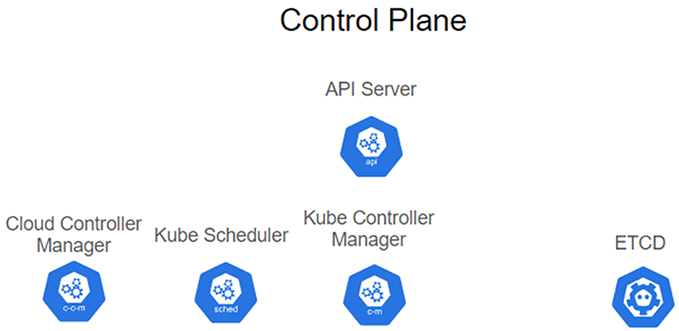
Use the component diagram to trace how etcd, the API server, scheduler, and controllers form the control plane. section 3.2.1


