AI-generated content is work produced wholly or partly by an artificial-intelligence system. It includes text drafted by language models and visuals made from prompts. When a student edits an AI-drafted essay or a chatbot response is paraphrased into an email, the boundary between human and machine authorship becomes unclear. section 6.9 section 4.7
Detection methods look for statistical patterns, classify text, embed watermarks, or track provenance. These approaches can misfire, be evaded through small edits or paraphrasing, and become less effective as language models change. No single technical method reliably identifies all AI-generated content. section 6.9 section 6.12
Examples of detection approaches include:
- GLTR highlights how likely each word is according to a language model; its usefulness declined as models evolved. section 6.9
- Text watermarking subtly biases word choices to leave a detectable signal, which edits or paraphrasing can remove. section 6.12
Figure 6.9 How a language model uses highlighted word biasing to embed watermarks in the generated text
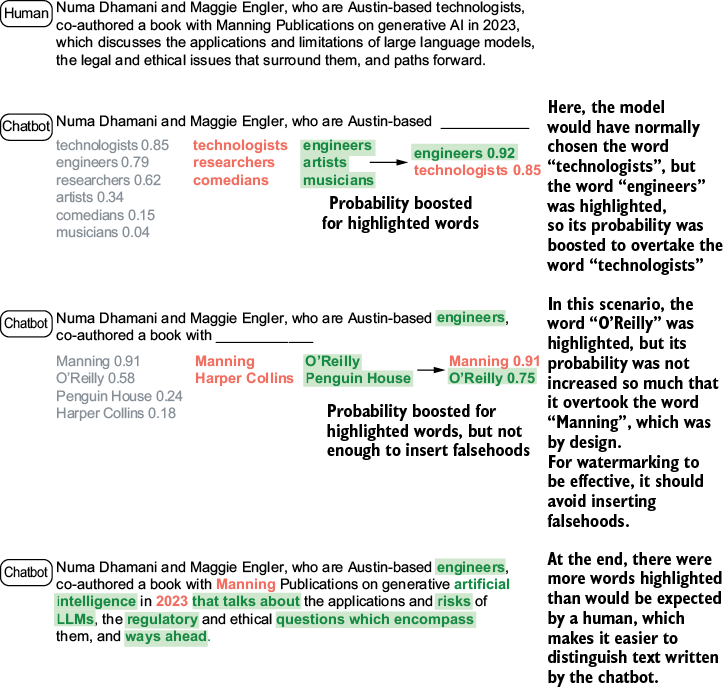
The figure illustrates how biased word choices can embed a watermark in generated text. section 6.9

