Cross-functional collaboration coordinates design, development, testing, product, and security work around shared protection of critical assets. It shifts security from a standalone function into the development life cycle, so risks are addressed proactively rather than after delivery. section 5.2
Collaboration commonly breaks down when:
- Teams operate in silos or lack clear security ownership. section 5.2
- Development prioritizes speed and feature delivery while security prioritizes risk reduction. section 5.2
- Engineering teams lack enough security expertise to apply secure coding practices consistently. section 5.2
Organizations can strengthen the practice by:
- Establishing clear communication channels and integrating security into agile workflows. section 5.2
- Embedding security champions within engineering and product teams. section 5.2
- Using regular training, joint threat modeling sessions, and shared security metrics. section 5.2
Figure 5.2 An example of aligning cybersecurity initiatives within the business environment and a typical reporting structure. CISOs most often report to the CIO. Also, the CISO will sometimes report directly to the board.
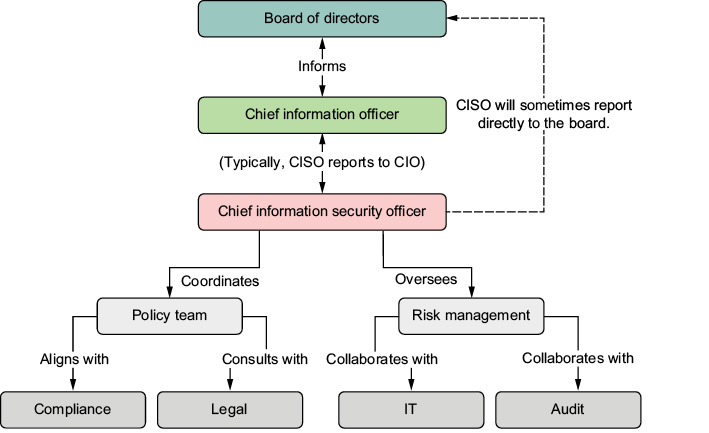
Use the reporting-structure figure to connect collaboration with business alignment, leadership visibility, and CISO relationships. section 5.2

