Domain knowledge
Domain knowledge is specialized understanding of the concepts, facts, practices, relationships, and constraints of a particular subject area.

Experimentation for Engineers
Domain knowledge is specialized knowledge about the application area, processes, and constraints relevant to a system.
- How it is used
- Constrains experimental designs and supplements decisions about system changes before business-metric impact is measured.
- How deep it goes
- Defines domain knowledge, explains its predictive limits, and works through a parameter-validity constraint without formalizing acquisition methods.
- Examples
- Uses a proprietary trading strategy whose nonnegative signal threshold prevents overlapping buy and sell decisions.
- What you can do after
- Evaluate/understand when business or engineering knowledge can safely restrict a design space but cannot replace an experiment.
Read how Experimentation for Engineers explains domain knowledge →

Inside AI
Domain knowledge is specialized understanding of the facts, practices, constraints, and terminology of a particular subject area.
- How it is used
- Uses domain knowledge to guide interpretation and validation of AI predictions in consequential applications.
- How deep it goes
- Explains expert validation through a medical failure example and briefly recommends multidisciplinary collaboration.
- Examples
- Illustrates misleading pneumonia-risk predictions for patients with asthma and the information a clinician considers during diagnosis.
- What you can do after
- Evaluate AI predictions with domain experts by checking whether inferred patterns fit the subject’s real-world context.

AI-Powered Search
Domain-specific knowledge is information, concepts, terminology, and relationships pertaining to a particular subject area.
- How it is used
- Uses domain understanding to interpret search queries and improve relevance alongside content and user understanding.
- How deep it goes
- Defines domain understanding and outlines representations, query interpretation, and batch learning without detailing an implementation.
- Examples
- Illustrates learning common misspellings and preferred corrections from user signals for query processing.
- What you can do after
- Evaluate how domain resources and learned signals can inform query interpretation and ranking, including when keyword search remains useful as a fallback.
The Well-Grounded Data Analyst
Domain expertise is specialized knowledge of the subject area represented by the data or analysis.
- How it is used
- Uses subject-area understanding to interpret addresses, challenge automated categorization, and communicate meaningful findings to stakeholders.
- How deep it goes
- Demonstrates iterative validation and manual correction, but stops short of formalizing domain-expert elicitation or reusable geographic rules.
- Examples
- Uses London addresses, “Other” records, the Hull abbreviation, city-list comparison, and spending by city.
- What you can do after
- Diagnose misleading categorical results and improve them through targeted inspection, validation, and correction.
Read how The Well-Grounded Data Analyst explains domain knowledge →
Causal Inference for Data Science
Domain knowledge is knowledge about the real-world subject matter, mechanisms, and context represented by a dataset or model.
- How it is used
- Guides causal inference by translating real-world mechanisms into graphs, assumptions, and defensible adjustment choices.
- How deep it goes
- Explains causal direction, confounder selection, graph construction, positivity, and adjustment while emphasizing limitations from missing variables.
- Examples
- Uses kidney-stone treatment assignment, causal graphs, propensity-score variables, and comparisons between predictive accuracy and causal validity.
- What you can do after
- Evaluate causal questions, collaborate with domain experts, identify confounders, and select adjustments supported by the causal structure.
Read how Causal Inference for Data Science explains domain knowledge →

Starting Data Analytics with Generative AI and Python
Subject-matter understanding of the meanings, expected values, and valid relationships in an application's domain.
- How it is used
- Guides research-question design, analytical interpretation, data-quality review, and oversight of AI-generated methods.
- How deep it goes
- Connects expected patterns, business meaning, outlier decisions, and AI review, but does not provide a domain-specific decision template.
- Examples
- Uses expected chart shapes, correlation meaning, a New York–Los Angeles transaction anomaly, and value_counts() for review.
- What you can do after
- Evaluate findings, validate anomalies, refine AI analysis, and test generated code against business expectations.
Read how Starting Data Analytics with Generative AI and Python explains domain knowledge →
Building Specialized AI Systems
Domain-specific knowledge is knowledge concerning the terminology, practices, facts, and reasoning conventions of a particular field.
- How it is used
- Guides selection and fine-tuning of models for organization-specific decision support and professional tasks.
- How deep it goes
- Distinguishes retrieved information, pretraining, and fine-tuning, while explaining why specialized reasoning cannot be supplied by retrieval alone.
- Examples
- Uses credit risk assessment and biomedical question answering to contrast organization-specific rules with specialized scientific language.
- What you can do after
- Evaluate/understand whether a base model has sufficient domain grounding before adapting it for a specialized task.
Read how Building Specialized AI Systems explains domain knowledge →
Data Without Labels
Domain knowledge is subject-matter understanding about the real-world context represented by data and analytical results.
- How it is used
- Checks whether patterns found in data support credible business conclusions and actions.
- How deep it goes
- Explains the need to test a rule against business logic, but gives no formal procedure for acquiring domain knowledge.
- Examples
- Contrasts shopping-basket rules about eggs, bread, cheese, and milk using a five-invoice transaction table.
- What you can do after
- Evaluate/understand whether an association rule makes business sense before using it to guide a decision.

AI Agents in Action
Knowledge is information available to an agent for interpreting context, reasoning, and performing tasks.
- How it is used
- Provides relevant external information to contextualize agent prompts and support questions and reference lookups.
- How deep it goes
- Explains retrieval and semantic search, then walks through document indexing, querying, and connecting a knowledge store to an agent.
- Examples
- Uses a movie script in a Nexus knowledge store and a calculus PDF uploaded to a custom GPT.
- What you can do after
- Operate/configure a Nexus knowledge store or ChatGPT custom GPT with uploaded reference documents.
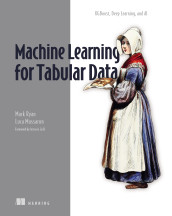
Machine Learning for Tabular Data: XGBoost, Deep Learning, and AI
Domain knowledge is expertise about the subject matter and phenomena represented by a dataset.
- How it is used
- Guides feature engineering, data cleaning, feature selection, exploratory analysis, validation, and model preparation.
- How deep it goes
- Explains practical decisions with real-estate and collinearity examples but stops short of a general method for acquiring domain expertise.
- Examples
- Uses car-fuel relationships, duplicated numeric features, and real-estate bathrooms, parking, furnishing, property type, and location fields.
- What you can do after
- Apply it to design meaningful features, select among redundant predictors, justify imputations, and adapt modeling workflows to the problem.

AI Agents in Action, Second Edition
- How it is used
- Supplies task-specific external information to AI agents through retrieval and prompt augmentation.
- How deep it goes
- Explains storage and retrieval options, then gives practical guidance on filtering, hybrid search, grounding, and access boundaries.
- Examples
- Uses PDF documents, database tables, and a product knowledge-base retrieval tool with metadata filters.
- What you can do after
- Evaluate and configure retrieval practices for an agent using grounding, metadata filters, and complementary search methods.
Read how AI Agents in Action, Second Edition explains domain knowledge →

Outlier Detection in Python
Domain knowledge is application-specific knowledge about entities, processes, relationships, and conditions relevant to data analysis.
- How it is used
- Guides feature-subspace selection when detecting meaningful combinations of values in outlier detection.
- How deep it goes
- Explains the selection rationale and computational trade-offs, but does not provide a domain-specific selection checklist.
- Examples
- Uses staff-expense fields and baseball-statistic feature sets as concrete feature-selection artifacts.
- What you can do after
- Evaluate which feature combinations may produce interpretable outliers while recognizing coverage and computation trade-offs.
Read how Outlier Detection in Python explains domain knowledge →

Coding with AI
Domain-specific knowledge is specialized understanding of the problem area to which software is applied.
- How it is used
- Guides developers in evaluating AI suggestions and adapting generated code to project-specific architecture, behavior, and user needs.
- How deep it goes
- Applies domain knowledge through evaluation, revision, verification, and edge-case handling rather than formalizing the knowledge itself.
- Examples
- Uses a Flask greeting application, session-ending JavaScript, question selection, database state, and duplicate-entry fallback handling.
- What you can do after
- Evaluate, revise, and verify AI-generated application code against architectural goals, expected workflows, state requirements, and edge cases.

The Art of AI Product Development
Domain knowledge is specialized understanding of the concepts, practices, workflows, and constraints of a particular field or industry.
- How it is used
- Guides specialized AI product choices, user workflows, evaluation criteria, and collaboration with stakeholders.
- How deep it goes
- Connects domain knowledge to datasets, benchmarks, user feedback, and model updates, but does not detail implementation algorithms.
- Examples
- Uses supply forecasting errors involving weather and supplier delays, plus feedback buttons, comments, roundtables, and roadmap input.
- What you can do after
- Apply domain knowledge to build relevant evaluations, refine AI behavior, and improve workflows through structured user feedback.
Read how The Art of AI Product Development explains domain knowledge →

Think Like a CTO
Domain knowledge is specialized understanding of a particular industry, business area, or subject matter.
- How it is used
- Applies expertise to board guidance, vendor selection, team capability, and awareness of industry changes.
- How deep it goes
- Evaluates expertise through relevant skills, practical exercises, accessibility, scalability, and references rather than price alone.
- Examples
- Uses board members’ guidance, release-team tools such as Jenkins and SonarQube, and vendor exercises as examples.
- What you can do after
- Evaluate vendor expertise through skills alignment and exercises, and prepare board presentations around members’ business focus.
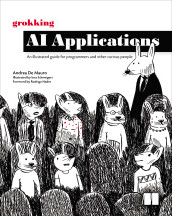
Grokking AI Applications
Information supplied alongside a model input to provide facts relevant to the requested answer.
- How it is used
- Supplies up-to-date or private facts that an LLM needs to answer a specific query.
- How deep it goes
- Demonstrates prompt-based knowledge and two simple retrieval options, while deferring consistent retrieval to RAG.
- Examples
- Uses an office-hours question with supplied hours, address, and phone number to demonstrate a specific answer.
- What you can do after
- Apply it by adding relevant facts to a prompt or retrieving pertinent sentences from a document repository.
Read how Grokking AI Applications explains domain knowledge →

AI for Everyday IT
Domain knowledge is specialized information and understanding about a particular subject area, profession, or operational context.
- How it is used
- Guides AI work by helping practitioners define requirements, structure problems, and direct outputs.
- How deep it goes
- Explains how expertise shapes prompts and identifies database work where contextual judgment remains necessary.
- Examples
- Uses an artist’s painting template and database modeling of business requirements as examples.
- What you can do after
- Apply domain expertise to structure AI requests with requirements and boundaries rather than asking for finished products.

Knowledge Graphs and LLMs in Action
Specialized knowledge and contextual understanding of a particular scientific or professional domain.
- How it is used
- Grounds intelligent systems, graph analytics, and LLM outputs in specialized scientific or professional context.
- How deep it goes
- Applies expertise to interpretation, feature selection, validation, and knowledge-base refinement without detailing formal expertise elicitation.
- Examples
- Uses celiac-disease pathway analysis, DWPC feature engineering, established ontologies, and expert-refined knowledge bases.
- What you can do after
- Apply it to select interpretable features, validate analytical results, and produce contextually grounded recommendations.
Read how Knowledge Graphs and LLMs in Action explains domain knowledge →
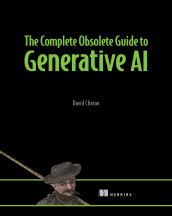
The Complete Obsolete Guide to Generative AI
Specialized understanding and expertise concerning a particular subject or professional field.
- How it is used
- Guides prompting, reviewing, and applying LLMs to specialized documents and professional tasks.
- How deep it goes
- Explains its practical role through contract drafting and warns that generated details still require human checking.
- Examples
- Uses contract drafting, consulting terms, revenue shares, and specialized troubleshooting as concrete examples.
- What you can do after
- Evaluate generated specialized documents against known facts, rights, and risks instead of relying on fluent output automatically.
Read how The Complete Obsolete Guide to Generative AI explains domain knowledge →

Financial AI in Practice
Subject-matter understanding that guides the interpretation and transformation of data into meaningful variables.
- How it is used
- Guides financial feature engineering in the data asset layer, connecting raw data transformations to meaningful predictive variables.
- How deep it goes
- Defines its role and gives feature examples, but stops short of implementation steps or code.
- Examples
- Uses volatility measures, fraud-velocity variables, and seasonal consumer-spending patterns as feature examples.
- What you can do after
- Apply it to shape financial features that represent meaningful concepts rather than arbitrary correlations.
Read how Financial AI in Practice explains domain knowledge →
Also covered in
- The Creative Programmer
- Data Storytelling with Altair and AI
- Think Like a Software Engineering Manager
- Introduction to Generative AI, Second Edition
- Digital Twins in Action
- "Looks Good to Me"
- Effective Behavior-Driven DevelopmentIn early access (MEAP)
- Grokking Statistics
- Architecture Modernization: Socio-technical alignment of software, strategy, and structure
- Grokking AI Algorithms, Second Edition
- Investing for Programmers
- Effective Conversational AI
What to know first
- language modelA language model is a computational model that represents patterns in linguistic sequences to assign probabilities, predict, generate, or evaluate language.
- ChatGPTChatGPT is OpenAI’s conversational AI service, which lets users interact with generative AI models and related tools through natural-language prompts.
- prompt engineeringPrompt engineering is the deliberate design and refinement of inputs, instructions, and context to guide an AI model’s behavior or outputs.
- AI agentAn AI agent is a computational system that uses artificial intelligence to interpret information and select or perform actions toward goals while interacting with an environment.
Related concepts
- informationproduced by · Information is content that conveys meaningful distinctions or reduces uncertainty about possible states, observations, or outcomes.
- instruction fileconfigured by · An instruction file is a file containing directions or context that guide an AI system’s behavior or work.
- retrieval-augmented generationused by · Retrieval-augmented generation is a technique that retrieves relevant information from external sources and supplies it as context to a generative model when producing an output.
- wisdomproduces · Wisdom is knowledge and insight applied with sound judgment and ethical consideration to guide decisions and actions.
- experimentationcontrasts with · Experimentation is the planned investigation of a question or hypothesis by conducting trials or interventions and observing their outcomes.
- ai teampart of · An AI team is a cross-functional group that combines the artificial-intelligence, data, and domain capabilities needed to develop an AI product.
Questions about domain knowledge
What is domain knowledge?
Domain knowledge is specialized understanding of the concepts, facts, practices, relationships, and constraints of a particular subject area.
Which Manning books explain domain knowledge?
Experimentation for Engineers, Inside AI, AI-Powered Search, The Well-Grounded Data Analyst, Causal Inference for Data Science, Starting Data Analytics with Generative AI and Python, Building Specialized AI Systems, Data Without Labels and 12 more.
What should I know before learning domain knowledge?
Manning books that teach domain knowledge usually introduce language model, ChatGPT, prompt engineering and AI agent first.
What is the difference between domain knowledge and experimentation?
Domain knowledge is specialized understanding of the concepts, facts, practices, relationships, and constraints of a particular subject area. Experimentation is the planned investigation of a question or hypothesis by conducting trials or interventions and observing their outcomes.
What is domain knowledge part of?
Domain knowledge is part of ai team. An AI team is a cross-functional group that combines the artificial-intelligence, data, and domain capabilities needed to develop an AI product.
What is domain knowledge also called?
Domain knowledge is also called domain expertise, domain-specific knowledge or specialized knowledge.
These guides are generated from the text of Manning books by Manning's knowledge graph and link to the sections they draw on. The full books are available on liveBook and at manning.com.