Domain knowledge is specialized understanding of a field’s concepts, workflows, constraints, and real-world exceptions. It helps AI products deliver meaningful value rather than merely produce plausible outputs. Vertical products depend on especially rich domain knowledge because their users and requirements are narrower but more demanding. section 12.1 section 2.1.3
Use domain knowledge to:
- Choose between prompt engineering, retrieval-augmented generation, and fine-tuning when general model behavior does not fit a specialized task. section 8.3
- Design task-specific datasets, evaluations, and benchmarks around real use cases instead of relying on generic performance measures. section 8.3
- Translate technical choices into business outcomes, practical workflow improvements, trust, adoption, and governance. section 12.4
- Capture exceptions that static datasets miss by involving users in testing, feedback, and iterative model improvement. section 12.3.5
Supply forecasting
A forecasting system initially missed regional weather effects and recurring supplier delays because it assumed historical demand patterns and fixed lead times. Users flagged incorrect predictions, selected reasons, and added comments. Data scientists used those observations to adjust the model, improving accuracy by 12% within a month. High-quality contributors then joined feedback roundtables and influenced roadmap decisions as co-creators. section 12.3.5
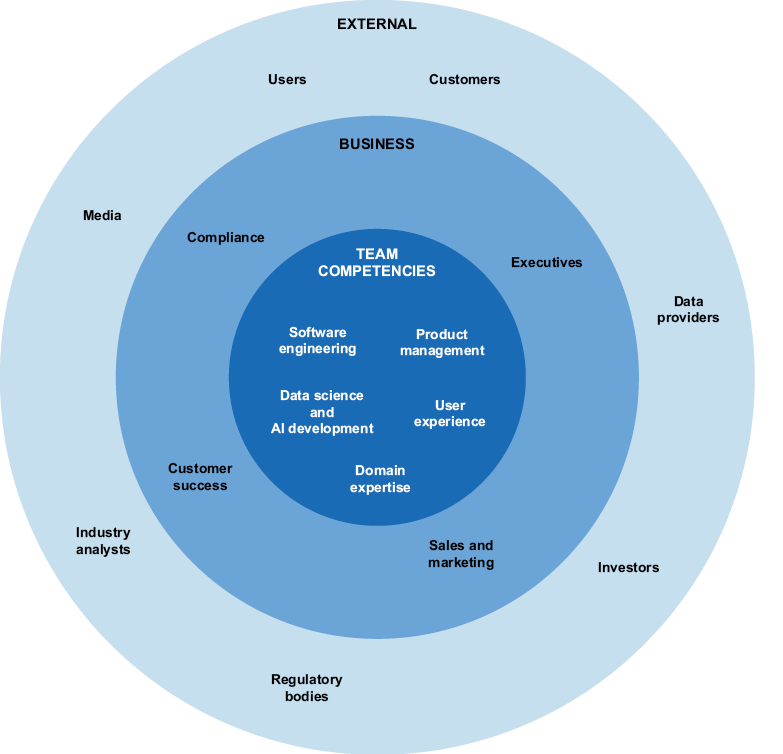
Map domain experts alongside data science, software engineering, and user experience so product decisions reflect technical, user, and industry requirements. section 12.1
















