A customer problem is the need, goal, constraint, or desired outcome a product should address. Define it before proposing solutions: it gives the project direction, keeps users central, and creates a basis for judging success. section 4.1.4 section 4.3
Turn a customer problem into a usable design foundation:
- Identify who experiences the problem, what they need, why it matters, and the circumstances in which they use the product. section 4.1.4 section 3.4.1
- Write the problem as a hypothesis rather than treating an initial assumption as verified knowledge. section 4.1.4 section 4.1
- Validate it with research, combining behavioral or numerical evidence with user attitudes, opinions, and feedback. section 4.3 section 4.1
- Use the validated problem to define requirements, create solutions, test them, and revise when they fail to satisfy the need. section 3.4.1
Google Glass
Google Glass demonstrated the risk of solving a nonexistent consumer problem. Its camera and display raised privacy, security, and safety concerns, while more focused enterprise use cases later emerged. The lesson is to investigate whether a need exists before investing in a solution. section 4.0
Figure 3.4 The user-centered design process starts with identifying a user need you are trying to solve and then moves on to how users are going to utilize what you provide, identifying the requirements needed to solve the use case, building a design solution, and evaluating whether the design fulfills the user’s need. If the process does not satisfy the user’s need, it restarts.
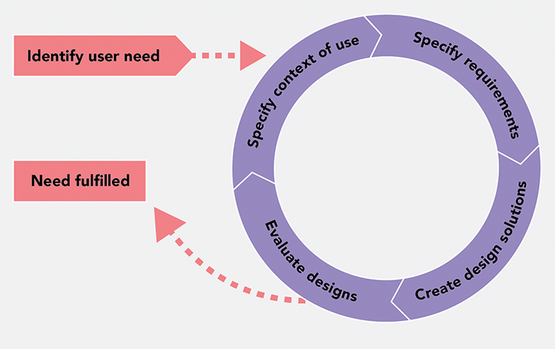
Follow the cycle from identifying a customer problem through context, requirements, design, and evaluation; restart research and design when the solution does not fulfill the need. section 3.4.1






