Cycle time is the time required to deliver a change to production or obtain feedback about its quality. Slow reviews, infrequent integration, and long-running tests increase waiting and delivery friction. section 1.2.1 section 1.2.2
Use the inner and outer loops to locate delays:
- Inner loop: developers implement a requirement, work in a development environment, run local activities, and commit the change to the mainline. Pre-integration reviews and long-lived feature branches extend this loop. section 1.2.1
- Outer loop: a mainline commit triggers compilation, tests, static analysis, artifact creation, acceptance testing, and eventual release. section 1.2.2
- Keep the commit stage below five minutes and the acceptance stage below sixty minutes to preserve fast feedback and limit cycle-time growth. section 1.2.2
A delayed delivery cycle
A developer waits through a long pre-integration review, then integrates only after a feature branch is complete. The resulting feedback arrives late, merge conflicts become expensive, and refactoring is discouraged. A faster mainline workflow can trigger automated build and test feedback soon after each push. section 1.2.1
Figure 1.3 The inner loop is triggered by a requirement; it consists of all the activities carried out in a development environment to make a change, and it ends with the change committed to the mainline.
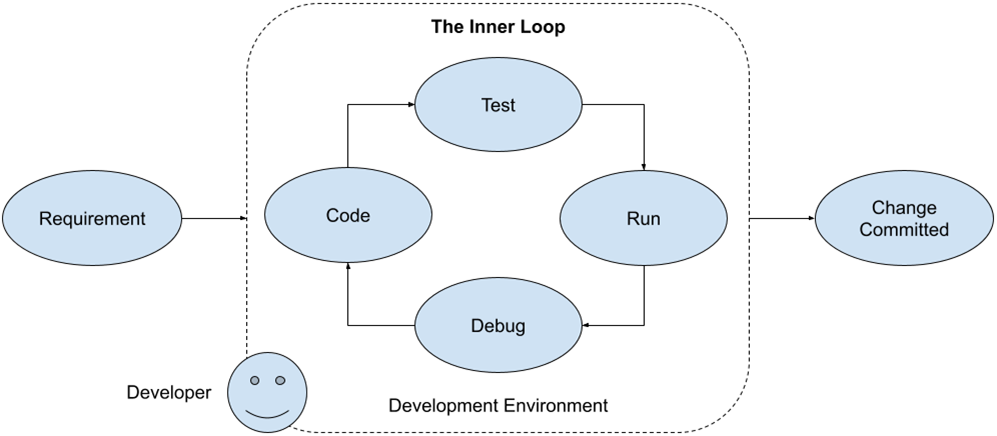
Trace the inner loop from a requirement through development activities to a mainline commit. section 1.2.1
Figure 1.4 The outer loop is triggered every time a new change is committed to the mainline; it goes through multiple stages until the change is released to customers and delivers value.
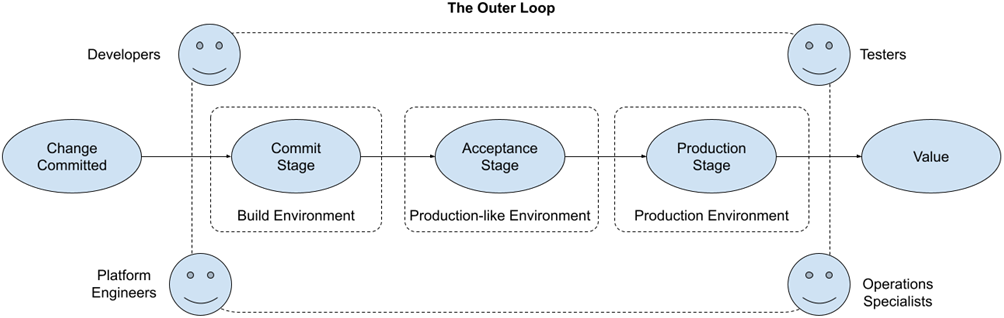
Trace the outer loop from a mainline commit through staged validation to released customer value. section 1.2.2




