DALL-E is a text-to-image generative AI model: it creates unique, realistic images from textual descriptions. In data storytelling, it supplies visual context that can make a chart’s topic more immediate than data marks alone. section 1.2 section 4.1.5
Start with a direct prompt that names the subject and style. For a chart comparing sports, “an enthusiastic athlete practicing [sport], in a white background, cartoon” produces focused illustrations; selecting the best output and using the editing tool can address visible imperfections. section 4.6 section 4.5.2
Use generated images as purposeful chart elements rather than decoration:
- Add images for categories that deserve emphasis, such as the top-performing rowing and cycling bars. section 4.5.2
- Give a human topic a face, as with selected photos representing homeless individuals. section 5.4.2
- Create compact visual cues for calls to action, such as black-and-white customer-experience and dollar-bag icons. section 9.2.2
Adding generated images to an Altair chart
After generating and choosing images, save them in a remote repository and place their URLs in a DataFrame. An Altair mark_image() layer can then position a 35×35 image at each selected category and its percentage-improvement value. section 4.5.2
Treat outputs as draft visual assets to review before use. Generative AI can produce wrong or biased information, so generated content needs monitoring and adjustment for accuracy and fairness. It supports creativity and reasoning rather than replacing them. section 4.1.5 section 4.6
Figure 5.18 The photos generated by DALL-E when prompted with a photo of a homeless individual
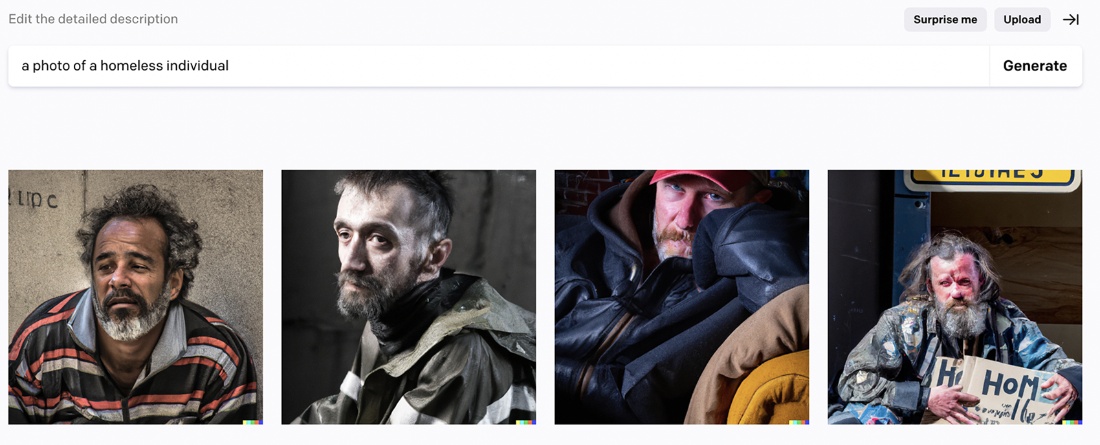
Four candidate photos from the prompt “a photo of a homeless individual” illustrate generation followed by human selection for a data-story visual. section 5.4.2



