Data exfiltration is the unauthorized transfer of sensitive data from an organization’s internal network to an external location. The data might be customer records, financial information, intellectual property, or trade secrets. For an attacker, stealing that information can be the final objective of a cyberattack. section 14.3.7 section 12.2.7
Two ways data can leave
An employee downloads confidential client records and emails them to a personal account. In another case, malware on a server periodically uploads sensitive files to a remote server controlled by an attacker. The first involves an insider; the second can happen through a compromised system. section 14.3.7
Common routes include:
- Email sent to an external address. section 14.3.7
- Uploads to unauthorized cloud storage or file-sharing services. section 14.3.7
- Files copied onto removable media such as a USB drive. section 14.3.7
Prevention takes several layers. Need-to-know access limits which data each employee can reach. Device controls can block removable media, while endpoint protection can detect malware and unauthorized activity. Data loss prevention (DLP) monitors data movement and applies policies to help stop sensitive information from leaving without permission. No single control eliminates the risk. section 14.3.7 section 14.0
Figure 14.7 Overview of enterprise Data Loss Protection (DLP) architecture with centralized policies enforced on network, endpoint, and storage layers.
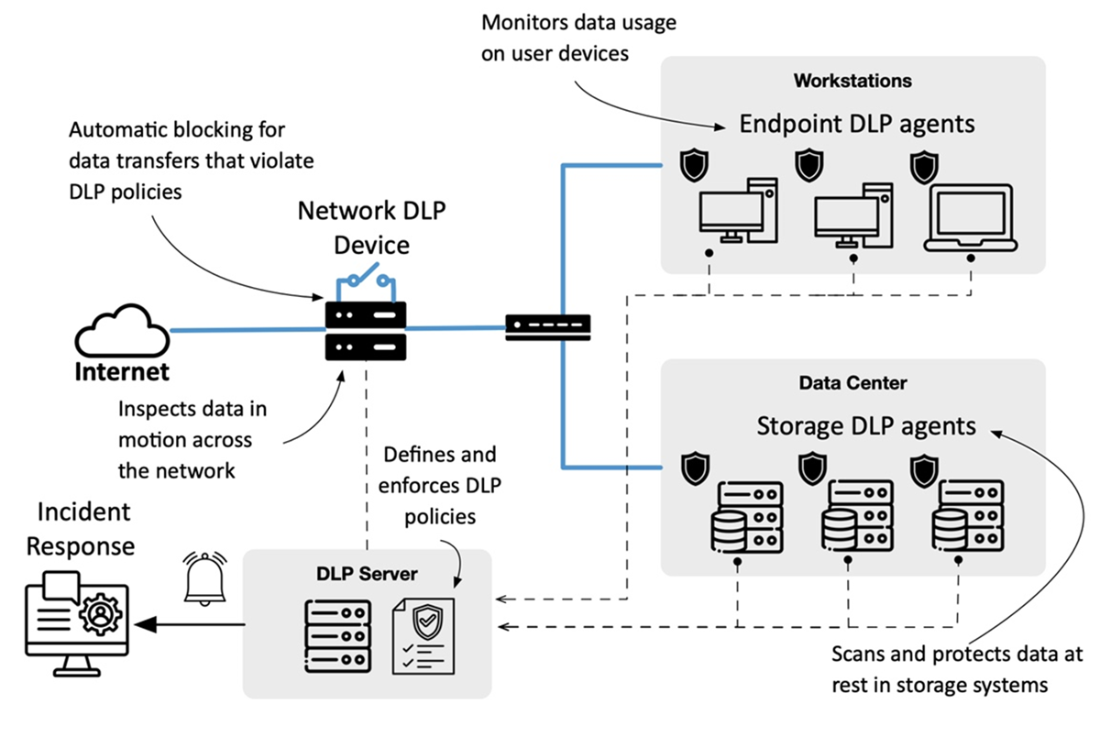
The diagram shows how centralized DLP policies can be enforced across network, endpoint, and storage layers. section 14.3.8
DLP depends on knowing which information is sensitive. Incomplete or inaccurate labels can cause false alarms or missed transfers. Encrypted traffic also limits inspection unless SSL/TLS inspection is used; that option adds privacy concerns and performance overhead. section 14.3.8


