Data tampering means changing data without authorization. During transmission, an attacker might replace a software update, alter a bank statement, or redirect a payment. Because the result can look normal, tampering is often harder to notice than eavesdropping. section 10.2.2
TLS counters tampering with message integrity. Each message carries a cryptographic check, such as a MAC or HMAC. If the received data no longer matches that check, the browser rejects it. TLS therefore helps ensure that the recipient receives what the sender intended across untrusted networks. section 10.2.2 section 10.4
A payment form silently changed
You enter the correct bank-account number in an online payment form, but an attacker in the middle replaces it with their own. TLS detects the altered message through its integrity check instead of delivering it silently. section 10.2.2
Treat tampering as one part of TLS protection:
- Use TLS to protect data from eavesdropping, tampering, and impersonation. section 10.5
- Use modern TLS deployments such as TLS 1.3; mTLS can require both communicating sides to prove their identities. section 10.5
Figure 10.8 TLS protects against three major threats: eavesdropping (unauthorized listening), tampering (modifying data in transit), and impersonation (using fake credentials to pretend to be someone else).
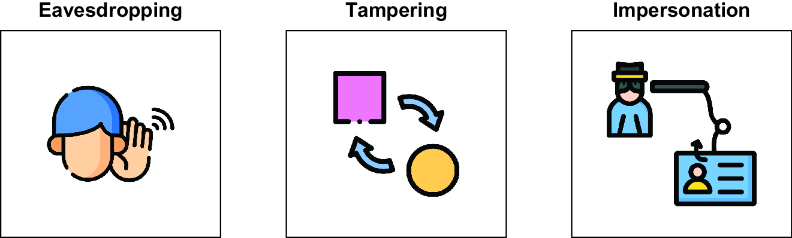
A visual overview places tampering alongside eavesdropping and impersonation as the three major threats TLS addresses. section 10.2
