Data wrangling turns transaction records spread across many tables into a usable view of inventory or customer status on a particular day. Establish this work before estimating an analysis or modeling project: the apparent volume of records does not show how much effort it will take to make them usable. section 3.5
Separate data-volume questions from data-quality questions. In the Bike Shop example, roughly 30 million transaction lines span five years, but the older three years are noisy legacy data; only the latest two years come from a clean source. section 3.5
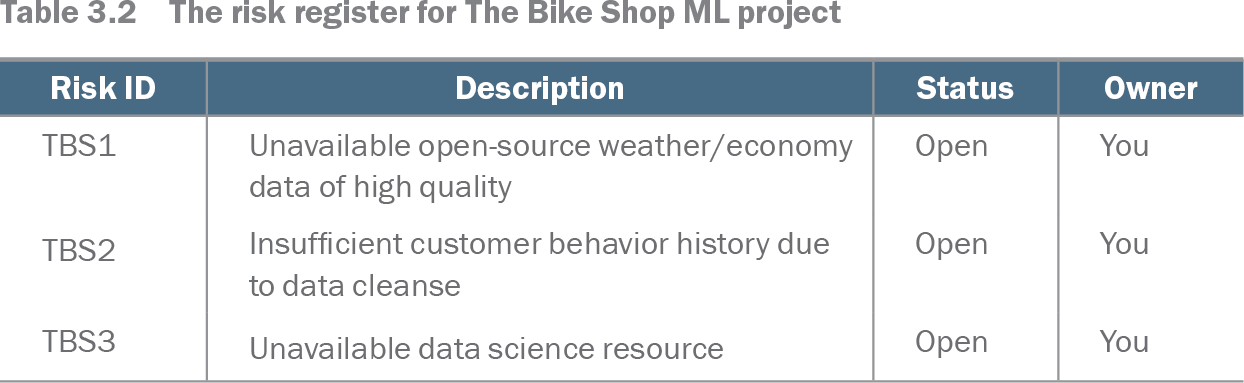
Table 3.2 The risk register for The Bike Shop ML project (view table figure)
| Risk ID |
Description |
Status |
Owner |
|---|---|---|---|
| TBS1 |
Unavailable open-source weather/economy data of high quality |
Open |
You |
| TBS2 |
Insufficient customer behavior history due to data cleanse |
Open |
You |
| TBS3 |
Unavailable data science resource |
Open |
You |
The risk register flags insufficient customer behavior history after a data cleanse—a reminder to check whether cleaner records still provide enough history for the intended work. section 3.5