Dataclass
A data class is a class form for declaring structured data whose common data-oriented members can be generated from its declared fields or properties.

Python How-To
A data class is a Python class whose declared attributes are treated as fields and for which common methods such as a constructor can be generated automatically.
- How it is used
- Reduces boilerplate when defining extensible data models.
- How deep it goes
- Explains field discovery, defaults, freezing and inheritance with examples, while leaving mutable-field defaults as an exercise.
- Examples
- Uses restaurant bills to demonstrate generated methods, defaults, freezing and subclasses, and task records to demonstrate dictionary conversion.
- What you can do after
- Apply it via Python’s dataclass decorator to define fields, set defaults, freeze instances and create subclasses.
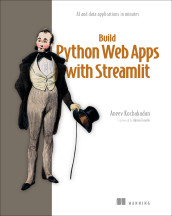
Build Python Web Apps with Streamlit
A dataclass is a Python class form that automatically supplies standard methods and supports concise declaration of data fields.
- How it is used
- Structures application data objects such as units, quantities, conversion results, and database-backed haikus.
- How deep it goes
- Explains decoration, fields, annotations, initialization, and attribute access, but does not detail generated methods beyond __init__.
- Examples
- Uses Unit, Quantity, Result, and Haiku classes to model conversion data and persisted haiku records.
- What you can do after
- Build it from scratch as a concise typed class for application data and access its fields with dot notation.
Read how Build Python Web Apps with Streamlit explains dataclass →

Kotlin in Action, 2E
A data class is a Kotlin class whose compiler generates value-oriented methods such as equality, hashing, string conversion, and component functions from its primary constructor properties.
- How it is used
- Models concise value objects for functional-style Kotlin code and ordinary class-based programs.
- How deep it goes
- Explains generated equality, hashing, string conversion, and copying, including primary-constructor scope and immutability rationale.
- Examples
- Demonstrates Person collection processing, Customer equality and hashing, and Customer.copy with a changed postal code.
- What you can do after
- Apply it by declaring value properties in a primary constructor and using generated equality, hashing, string conversion, and copy operations.
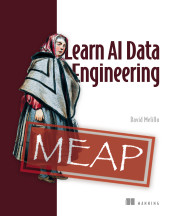
Learn AI Data Engineering
A data class is a class whose primary purpose is representing structured data, typically with declarative fields and automatically supplied data-oriented behavior.
- How it is used
- Structures AI responses for data cleaning, nested-data extraction, and other programmable data-pipeline transformations.
- How deep it goes
- Defines Pydantic BaseModel fields and response parsing, contrasting them with string parsing and hand-coded extraction without covering language-level dataclass internals.
- Examples
- Uses CleanedData for duplicate rows and null-heavy columns, then LibraryBook for flattening nested library JSON.
- What you can do after
- Apply it via Pydantic and structured response parsing to obtain typed, reusable AI results for Python data workflows.
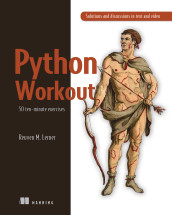
Python Workout: 50 ten-minute exercises
dataclass is a Python standard-library decorator that generates class boilerplate such as an initializer, representations, and comparison methods from declared fields.
- How it is used
- Reduces repetitive class-construction code when classes primarily store declared fields.
- How deep it goes
- Explains generated initializers, comparisons, representations, and mandatory annotations, but not decorator implementation internals.
- Examples
- Uses Scoop and Bowl classes, including a typed flavor field and a default-created collection of scoops.
- What you can do after
- Apply it via the @dataclass decorator to replace routine initializer and representation code.
Read how Python Workout: 50 ten-minute exercises explains dataclass →
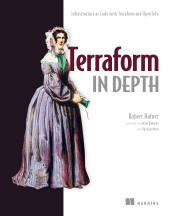
Terraform in Depth: Infrastructure as Code with Terraform and OpenTofu
A dataclass is a Python class whose common data-oriented methods and initialization behavior can be generated from declared fields.
- How it is used
- Packages Terraform or OpenTofu command results and parsed validation JSON into Python objects.
- How deep it goes
- Works through declared fields, parsing methods, nested objects, field options, and post-initialization; does not explore dataclass internals.
- Examples
- Uses CommandResults for command output and nested Validate and Diagnostic objects for an uninitialized workspace’s validation errors.
- What you can do after
- Build it from scratch: define data-oriented result classes and convert command JSON into nested objects that callers can inspect.
Read how Terraform in Depth: Infrastructure as Code with Terraform and OpenTofu explains dataclass →
Python Workout, Second Edition
A dataclass is a Python class whose commonly generated methods and field handling are supplied by the dataclass mechanism.
- How it is used
- Reduces repetitive class boilerplate when attributes mainly need initialization, comparison support, and useful representation.
- How deep it goes
- Explains generated initialization, comparisons, repr, annotations, and collection-field declaration without descending into decorator internals.
- Examples
- Uses Scoop with a flavor field and Bowl with a list of scoops, add_scoops, and a customized repr.
- What you can do after
- Build dataclasses with generated initialization and explicitly annotated fields, then extend them with ordinary methods.
Read how Python Workout, Second Edition explains dataclass →
The Art of Code
A Python dataclass is a Python class decorated to generate common methods for storing and representing data.
- How it is used
- Clarifies small data models by reducing supporting code around storage, construction, access, equality, and representation.
- How deep it goes
- Explains the design problem and practical rationale but does not detail decorator syntax, generated methods, or implementation internals.
- Examples
- Uses a verbose Person DTO, positional construction with nulls, and constructor or accessor boilerplate as contrasting examples.
- What you can do after
- Evaluate when concise data carriers improve readability without letting supporting code outweigh the data’s meaning.
Also covered in
- ScyllaDB in Action
- AI-Powered Developer: Build software with ChatGPT and Copilot
- Statistics Every Programmer Needs
- Coding with AI
- AI Agents for Offensive SecurityIn early access (MEAP)
What to know first
- PythonPython is a high-level, general-purpose, dynamically typed programming language with readable syntax and support for multiple programming paradigms.
- constructor methodA constructor method is a type-associated operation involved in creating an instance and establishing its initial state.
- attributeAn attribute is a named property or piece of information associated with an entity, object, or structured data item.
- classA class is a programming-language construct that defines a type’s structure and behavior and provides a basis for creating or representing objects.
Related concepts
- classkind of · A class is a programming-language construct that defines a type’s structure and behavior and provides a basis for creating or representing objects.
- componentN functionproduces · A componentN function is a Kotlin convention-named function that returns the Nth component of a composite value for use in a destructuring declaration.
- equality by valueproduces · Equality by value is an equality semantics in which values are considered equal when they represent equivalent contents, regardless of object identity.
- BaseModelcontrasts with · Pydantic BaseModel is the base class for defining typed data models with validation and support for parsing and serialization.
- boilerplate codeaddresses · Boilerplate code is repetitive, conventional supporting code that establishes required structure or routine behavior without expressing substantial application-specific logic.
Questions about dataclass
What is dataclass?
A data class is a class form for declaring structured data whose common data-oriented members can be generated from its declared fields or properties.
Which Manning books explain dataclass?
Python How-To, Build Python Web Apps with Streamlit, Kotlin in Action, 2E, Learn AI Data Engineering, Python Workout: 50 ten-minute exercises, Terraform in Depth: Infrastructure as Code with Terraform and OpenTofu, Python Workout, Second Edition and The Art of Code.
What should I know before learning dataclass?
Manning books that teach dataclass usually introduce Python, constructor method, attribute and class first.
What is the difference between dataclass and BaseModel?
A data class is a class form for declaring structured data whose common data-oriented members can be generated from its declared fields or properties. Pydantic BaseModel is the base class for defining typed data models with validation and support for parsing and serialization.
What kinds of dataclass are there?
Kinds of dataclass include frozen dataclass.
What is dataclass a kind of?
Dataclass is a kind of class. A class is a programming-language construct that defines a type’s structure and behavior and provides a basis for creating or representing objects.
These guides are generated from the text of Manning books by Manning's knowledge graph and link to the sections they draw on. The full books are available on liveBook and at manning.com.