Decimal
Decimal refers to base-ten numeric representation or arithmetic, with precision, scale, and rounding behavior determined by the particular type or system.
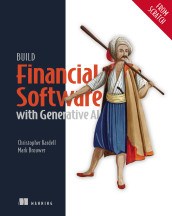
Build Financial Software with Generative AI (From Scratch)
Decimal is Python's arbitrary-precision decimal arithmetic type for representing base-ten numbers without the usual binary floating-point approximation.
- How it is used
- Uses Decimal to handle ACH debit and credit amounts across parsing, API responses, and dashboard calculations.
- How deep it goes
- Explains construction from strings versus floats and shows financial-field parsing and addition, without detailing Decimal arithmetic internals.
- Examples
- Uses 0.1 construction comparisons and ACH debit and credit totals extracted from file records.
- What you can do after
- Apply it via Python's decimal module to construct financial amounts from strings and avoid an intermediate float conversion.
Read how Build Financial Software with Generative AI (From Scratch) explains Decimal →
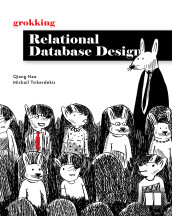
Grokking Relational Database Design
A DECIMAL data type is an SQL fixed-point numeric type whose precision and scale control the represented number of digits.
- How it is used
- Stores precise values such as product prices and money amounts in SQL table definitions.
- How deep it goes
- Explains precision, scale, fixed-point accuracy, and floating-point rounding risks through database and currency examples.
- Examples
- Uses DECIMAL(5,2) for product prices and contrasts floating-point currency conversion with fixed-point accuracy.
- What you can do after
- Apply it via CREATE TABLE by specifying total and fractional digit limits for accurate numeric columns.
Read how Grokking Relational Database Design explains Decimal →
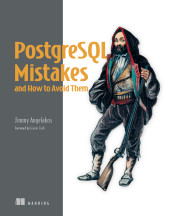
PostgreSQL Mistakes and How to Avoid Them
NUMERIC is an exact SQL numeric data type for storing values with specified precision and scale.
- How it is used
- Uses exact numeric storage for monetary values and other calculations where floating-point approximation is unacceptable.
- How deep it goes
- Defines NUMERIC and DECIMAL equivalence, explains monetary trade-offs, and warns against cross-database type-name assumptions.
- Examples
- Contrasts NUMERIC with MONEY and floating-point types, then uses Oracle NUMBER migration as a compatibility example.
- What you can do after
- Evaluate numeric choices, select NUMERIC for exact amounts, separate currency, and diagnose migration mappings that risk precision loss.
Read how PostgreSQL Mistakes and How to Avoid Them explains Decimal →
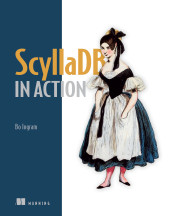
ScyllaDB in Action
DECIMAL is a ScyllaDB arbitrary-width decimal data type that represents values precisely.
- How it is used
- Stores precise decimal or very large numeric values when fixed-width or floating-point types are unsuitable.
- How deep it goes
- Defines arbitrary width and precision, contrasts rounding risks, and stops short of detailed storage or arithmetic internals.
- Examples
- Uses monetary values, base-unit integer storage such as cents, and numeric values beyond BIGINT’s range.
- What you can do after
- Evaluate/understand numeric type choices for accuracy, monetary storage, and unusually large values.

Python Workout: 50 ten-minute exercises
Decimal is a Python numeric class that provides decimal floating-point arithmetic with explicitly represented base-ten values.
- How it is used
- Uses Decimal for accurate decimal arithmetic, particularly in financial calculations where float inaccuracies matter.
- How deep it goes
- Demonstrates construction from strings, arithmetic, and conversion to float at the final boundary.
- Examples
- Uses 0.1 plus 0.2, user-entered decimal strings, and a progressively timed taxation calculation.
- What you can do after
- Apply it via Python's Decimal class to perform accurate arithmetic and delay conversion to float.
Read how Python Workout: 50 ten-minute exercises explains Decimal →
Also covered in
What to know first
- floating-point arithmeticFloating-point arithmetic is numerical computation using finite-precision representations of real numbers, which can introduce rounding and range errors.
- float64Float64 is a 64-bit floating-point numeric type, commonly represented by the IEEE 754 binary64 format.
- integerAn integer is a whole-number mathematical value, including negative numbers, zero, and positive numbers, with no fractional part.
- SQLSQL is a standardized declarative language for defining, querying, and manipulating data in relational database systems.
Related concepts
- floating-point arithmeticalternative to · Floating-point arithmetic is numerical computation using finite-precision representations of real numbers, which can introduce rounding and range errors.
- number typekind of · A numeric type is a type whose values represent numbers with a defined representation and support numerical operations.
- float64contrasts with · Float64 is a 64-bit floating-point numeric type, commonly represented by the IEEE 754 binary64 format.
Questions about Decimal
What is Decimal?
Decimal refers to base-ten numeric representation or arithmetic, with precision, scale, and rounding behavior determined by the particular type or system.
Which Manning books explain Decimal?
Build Financial Software with Generative AI (From Scratch), Grokking Relational Database Design, PostgreSQL Mistakes and How to Avoid Them, ScyllaDB in Action and Python Workout: 50 ten-minute exercises.
What should I know before learning Decimal?
Manning books that teach Decimal usually introduce floating-point arithmetic, float64, integer and SQL first.
What is the difference between Decimal and floating-point arithmetic?
Decimal refers to base-ten numeric representation or arithmetic, with precision, scale, and rounding behavior determined by the particular type or system. Floating-point arithmetic is numerical computation using finite-precision representations of real numbers, which can introduce rounding and range errors.
What is Decimal a kind of?
Decimal is a kind of number type. A numeric type is a type whose values represent numbers with a defined representation and support numerical operations.
These guides are generated from the text of Manning books by Manning's knowledge graph and link to the sections they draw on. The full books are available on liveBook and at manning.com.