Who keeps a democracy working when daily life leaves people exhausted? A democratic process depends on citizens taking part in collective decisions, not only on institutions acting for them. section 4.2.2
Participation can mean expressing opinions, voting, pursuing the greater good, or serving in government when necessary. It also depends on trust: when confidence in government declines, political division rises and satisfaction with democratic institutions weakens. section 4.3 section 4.2.2
A functioning democratic process asks citizens to:
- Stay engaged despite work, family, financial, and social pressures. section 4.2.2
- Express opinions and cast votes as parts of shared decision-making. section 4.2.2
- Judge institutions and public claims against objective truth and the broader good. section 4.2.2
- Recognize that motivated minorities can influence a better future, even when universal participation is unrealistic. section 4.2.2
Athenian participation
Athenian democracy expected citizens to vote, express opinions, and serve in government when necessary. Its model of equal civic power was significant, although historical definitions of citizenship excluded people by race, gender, and economic status. section 4.2.2
Figure 4.1 Public trust in the US government, 1958–20207
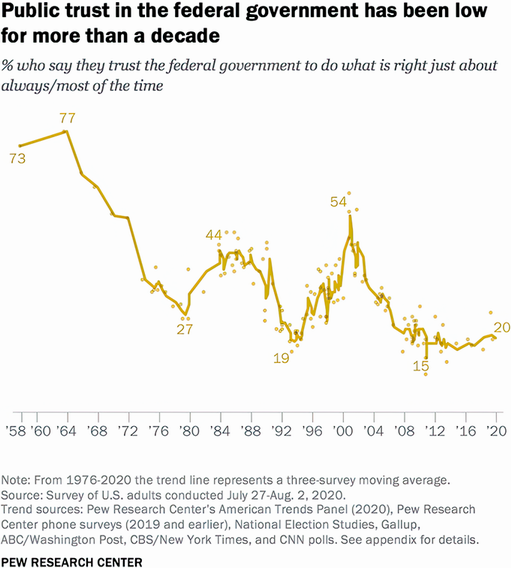
Trace the long decline in reported trust in the US government and connect institutional confidence with democratic functioning. section 4.3
